• Services
    • Local Moving
    • Long Distance
    • Hourly Labor Services
    • Apartment Moving
    • Last Minute Movers
    • Small Moves
    • Expert Packers and Movers
    • Senior Moving Services
    • Office Move
    • Student Movers
    • Disposal Removing Services
  • Local
    • Maryland
      • Annapolis
      • Baltimore
      • Bethesda
      • Chevy Chase
      • Columbia
      • Frederick
      • Gaithersburg
      • Olney
      • Poolesville
      • Potomac
      • Rockville
      • New Market
      • Urbana
      • Clarksburg
      • Damascus
    • Washington DC
    • Virginia
      • Alexandria
      • Arlington
      • Fairfax
      • Chantilly
      • Charlottesville
      • Fredericksburg
      • McLean
      • Great Falls
      • Gainesville
      • Springfield
      • Tyson’s Corner
      • Richmond
      • Vienna
      • Leesburg
      • Sterling
      • Ashburn
      • Reston
  • About Us
  • Blogs
  • Moving Tips
  • Services
    • Local Moving
    • Long Distance
    • Hourly Labor Services
    • Apartment Moving
    • Last Minute Movers
    • Small Moves
    • Expert Packers and Movers
    • Senior Moving Services
    • Office Move
    • Student Movers
    • Disposal Removing Services
  • Local
    • Maryland
      • Annapolis
      • Baltimore
      • Bethesda
      • Chevy Chase
      • Columbia
      • Frederick
      • Gaithersburg
      • Olney
      • Poolesville
      • Potomac
      • Rockville
      • New Market
      • Urbana
      • Clarksburg
      • Damascus
    • Washington DC
    • Virginia
      • Alexandria
      • Arlington
      • Fairfax
      • Chantilly
      • Charlottesville
      • Fredericksburg
      • McLean
      • Great Falls
      • Gainesville
      • Springfield
      • Tyson’s Corner
      • Richmond
      • Vienna
      • Leesburg
      • Sterling
      • Ashburn
      • Reston
  • About Us
  • Blogs
  • Moving Tips
Get Free Estimate
(301) 541-6793
  • Services
    • Local Moving
    • Long Distance
    • Hourly Labor Services
    • Apartment Moving
    • Last Minute Movers
    • Small Moves
    • Expert Packers and Movers
    • Senior Moving Services
    • Office Move
    • Student Movers
    • Disposal Removing Services
  • Local
    • Maryland
      • Annapolis
      • Baltimore
      • Bethesda
      • Chevy Chase
      • Columbia
      • Frederick
      • Gaithersburg
      • Olney
      • Poolesville
      • Potomac
      • Rockville
      • New Market
      • Urbana
      • Clarksburg
      • Damascus
    • Washington DC
    • Virginia
      • Alexandria
      • Arlington
      • Fairfax
      • Chantilly
      • Charlottesville
      • Fredericksburg
      • McLean
      • Great Falls
      • Gainesville
      • Springfield
      • Tyson’s Corner
      • Richmond
      • Vienna
      • Leesburg
      • Sterling
      • Ashburn
      • Reston
  • About Us
  • Blogs
  • Moving Tips
Get Free Estimate
(301) 541-6793
Get Free Estimate
  • Services
    • Local Moving
    • Long Distance
    • Hourly Labor Services
    • Apartment Moving
    • Last Minute Movers
    • Small Moves
    • Expert Packers and Movers
    • Senior Moving Services
    • Office Move
    • Student Movers
    • Disposal Removing Services
  • Local
    • Maryland
      • Annapolis
      • Baltimore
      • Bethesda
      • Chevy Chase
      • Columbia
      • Frederick
      • Gaithersburg
      • Olney
      • Poolesville
      • Potomac
      • Rockville
      • New Market
      • Urbana
      • Clarksburg
      • Damascus
    • Washington DC
    • Virginia
      • Alexandria
      • Arlington
      • Fairfax
      • Chantilly
      • Charlottesville
      • Fredericksburg
      • McLean
      • Great Falls
      • Gainesville
      • Springfield
      • Tyson’s Corner
      • Richmond
      • Vienna
      • Leesburg
      • Sterling
      • Ashburn
      • Reston
  • About Us
  • Blogs
  • Moving Tips
Author: AJ Moving Services
HomeAJ Moving ServicesPage 7
Main Image – Moving Tips How to Pack Your Kitchen Items_
Moving Tips
May 26, 2023

Moving Tips: How to Pack Your Kitchen Items?

Moving to a new home is an exciting adventure, but packing and transporting delicate kitchen items can be challenging. From fragile dishes and glassware to bulky appliances, ensuring the safety of your kitchen belongings requires careful planning and proper handling. In this comprehensive guide, we will provide you with valuable moving tips and insights to make your kitchen move smoothly and stress-free.

1. Plan and Create a Moving Checklist 

Start your moving process by creating a detailed checklist specifically for your kitchen. This will help you stay organized and ensure you notice all essential items. Identify which kitchen items you will pack first and prioritize them based on their fragility and frequency of use. Planning ahead allows you to allocate sufficient time and resources for each task.

2. Declutter and Donate

Before packing, take the opportunity to declutter your kitchen. Donate or sell items that you no longer use or need. This reduces the number of things you need to pack and helps you start fresh in your new space. Consider donating unexpired non-perishable food items to local food banks as well.

3. Gather High-Quality Packing Materials 

Invest in sturdy packing supplies to protect your kitchen items during the move. Acquire various-sized boxes, packing paper, bubble wrap, packing tape, and markers for labeling. Opt for specialized dish boxes with built-in dividers to secure fragile dishware.

4. Safely Pack Fragile Items

Fragile kitchen items, such as glassware, porcelain dishes, and delicate cookware, require extra attention during packing. Start by layering the bottom of each box with crumpled packing paper or bubble wrap as cushioning. Individually wrap each fragile item with packing paper or bubble wrap, securing them with tape. For additional protection, place them vertically inside the box and fill any remaining gaps with packing material to prevent shifting. Clearly label these boxes as “Fragile” and “This Side Up” to ensure they are handled carefully.


5. Secure Knives and Sharp Objects

To ensure the safety of both yourself and your belongings, handle knives and other sharp objects with caution. Place knives in a knife block or wrap them individually with cardboard and secure them with tape. Alternatively, use blade guards or sheaths to protect the sharp edges. One of the best moving tips is labeling these items as “Sharp Objects” for easy identification.


6. Disassemble and Prepare Appliances

Large kitchen appliances, such as refrigerators, dishwashers, and ovens, require special attention during a move. Refer to the manufacturer’s instructions for proper disassembly guidelines. Remove any detachable parts, such as shelves, trays, and glass doors, and pack them separately. Secure the power cords and wrap them around the appliance. Cover the surfaces with moving blankets or bubble wrap, securing them with tape. If available, use the original appliance boxes for maximum protection.

7. Utilize Sealable Bags for Small Items

Prevent small kitchen items, like measuring spoons, spice jars, or kitchen gadgets, from getting lost or tangled during the move. Place these items in sealable bags or small containers, grouping similar items. Label the bags accordingly and pack them in a larger box to keep them organized and easily accessible.[1]

8. Consider Professional Moving Assistance

If you’re overwhelmed by the prospect of packing and moving your kitchen, consider hiring professional movers or packers. Moving companies have the expertise, experience, and equipment to handle delicate items carefully. They can provide specialized packing materials, such as foam padding and custom crates, to ensure the safety of your kitchen belongings. Professional movers can also assist in loading and unloading heavy appliances, saving time and effort.[2]

9. Label Boxes Clearly

When packing your kitchen items, carefully label each box accurately and clearly. Use bold markers to write the contents and destination room on the outside of the box. This will make it easier to unpack and place items in their appropriate locations in your new home. Consider using color-coded labels or stickers to further distinguish between different categories or priorities.

10. Reinforce Boxes and Use Proper Stacking Techniques

Kitchen items can be heavy, especially when packed together. Reinforce your boxes with additional layers of packing tape to ensure they can withstand the weight. Avoid overpacking boxes to the point where they become too heavy to lift or prone to bursting. Instead, distribute the weight evenly among multiple boxes. When stacking boxes, place heavier items at the bottom and lighter items on top to maintain stability and prevent damage.

11. Preserve Perishable and Refrigerated Items

You must make special arrangements for perishable and refrigerated items when moving long distances or during warmer weather. Use coolers with ice packs to transport perishable foods, or consider consuming or donating them before the move. Empty and defrost your refrigerator and freezer well in advance, ensuring they are dry and clean to prevent mold and odors. Refer to the manufacturer’s instructions for any additional steps required to secure these appliances for transportation.[3]

12. Take Inventory and Photograph Valuable Items

Before packing, inventory your valuable kitchen items, such as fine china, antique silverware, or expensive appliances. Keep a detailed list of these items, including descriptions and photographs. This documentation will be helpful for insurance purposes in case of any loss or damage during the move.

13. Pack an “Essentials” Box 

Prepare an “essentials” box specifically for your kitchen. This box should contain the essentials you’ll need for the first few days in your new home, such as basic utensils, plates, cups, and a few cooking essentials. Mark this box as “Open First” to be easily accessible upon arrival.


Conclusion

Moving your kitchen items doesn’t have to be a stressful ordeal. By following these expert moving tips, you can ensure the safe transportation of your valuable and delicate kitchen belongings to your new home. From careful packing and labeling to considering professional moving assistance, these strategies will help you streamline the process and set up a functional kitchen in your new space. Embrace the excitement of a fresh start and enjoy the journey of creating a unique culinary haven.

FAQs

1. How do you pack kitchen items when moving?

Wrap fragile items individually with packing paper or bubble wrap, secure them with tape, and place them in sturdy boxes. Use dividers for dishware, pack small items in sealable bags, and label boxes.

2. When should I pack my kitchen when moving?

Start packing your kitchen items a few weeks before your move, focusing on things you don’t use daily. Leave essential items until the last few days to ensure you have what you need until moving day.

3. How do you transport things when moving?

Transport your belongings by renting a moving truck, hiring professional movers, or using a moving container service. Properly load and secure items in the vehicle, and consider using blankets or padding for added protection.

References: 

[1] https://www.moving.com/tips/how-to-pack-a-kitchen-like-a-pro/

[2] https://www.forbes.com/home-improvement/moving-services/how-to-pack-kitchen-items/

[3] https://mypieceofcakemove.com/how-to-pack-a-kitchen/

READ MORE
Main Image – What to Expect During a Local Move in Frederick, MD
Uncategorized
May 25, 2023

What to Expect During a Local Move in Frederick, MD?

Relocation is daunting, and everyone has different challenges to overcome. But the moving distance determines the complexity of the move to a great extent. There are different kinds of moves based on the distance. For instance, short-distance, long-distance and local moves.

Frederick is a vast city, and planning a local move within the city’s limits is understandable. Maybe there are better education facilities there, suitable employment or some other things you may need but they were not accessible from your current location.

Local moves are thought to be the easiest. But what should one prepare for when moving to a big city like Frederick? Some things include hiring movers from Frederick, MD, packing boxes, decluttering, etc. Understanding the process and being well-prepared can minimize stress and maximize the joy of starting fresh in your new Frederick residence 

1. Pre-Move Preparations

The first and foremost thing to work on is your pre-move preparations. It is one of the most critical steps in a move. Pre-move planning includes creating a moving checklist, executing the tasks in the given time, informing the facility providers of your moving date, etc.

On the other hand, you must also make arrangements in your new home. For instance, finding employment, whether you’ll be renting an apartment or buying a home, etc. Regarding a house purchase, you should also consider the buying time, as Frederick’s housing market is more competitive than other cities. [1]

Most local moves don’t require professional movers. But if you need a hand, consider movers from Frederick, MD. Research local movers and obtain quotes to find the one that suits your budget and requirements. Book your moving date well in advance to secure their services.

2. Hiring Professional Movers

Arranging help is the second stage of the process, which requires attention. You’ll need a hand even if you make a local move, as you cannot do everything alone. So the best thing is to hire a professional moving company. There are many local movers available in Fredrick as well.

But you can contact your neighbors or friends if their services are out of your budget. Asking your friends for assistance goes easy on the pocket, but it may serve better, especially if you plan to make a last-minute move.

Hiring professional movers can significantly alleviate the stress of a local move. Research and choose a reputable moving company. Check online reviews, seek recommendations, and verify the company’s licensing and insurance. Once selected, contact them to discuss the details of your move. Professional movers will handle the packing, loading, transportation, unloading, and unpacking if you opt for those services.

3. Packing and Preparation

After hiring a moving company in Frederick, MD, you’ll need to collect packing supplies and downsize your household so everything is in boxes when the moving day arrives. One of the most effective ways to reduce moving costs is decluttering.

Pin down the items you no longer require and donate them. Some movers in Frederick, MD, also offer junk removal services and can care for unwanted things—the next essential thing to ensure an environmentally friendly move by choosing eco-friendly packing supplies.

Getting innovative with the available packing material is necessary because about 8.4 million tons of moving waste is produced each year [2]. You can find some incredible tips for eco-friendly moves online if you have little time to brainstorm. Lastly, don’t forget to pack an essentials kit, as there is a rare chance you’ll have the strength to scribble the boxes to find a tissue roll!

4. Moving Day and Transportation

Moving day is the most hustling period of the entire move. Seeing your entire household reduced to mere cardboard boxes increases the adrenaline in your body. However, it is essential to think straight and start executing.

If you have hired professional movers, they will arrive at your home at the agreed-upon time and begin loading the boxes in vehicles. These individuals have the equipment for lifting heavy-weight items, so anything is less likely to get damaged. Once the loading process finishes, the Frederick movers take the road to your new home.

However, hiring a professional is not your pie. You can try DIY moving by hiring rental trucks. As the name explains, DIY or Do It Yourself moving doesn’t require any professionals; it is only you and your relocation medium [3]. Many private or company-owned rental trucks are available, so you can easily find something which fits your needs and budget.

5. Settling into Your New Home

After the movers have unloaded your belongings, it’s time to settle into your new Frederick home. The first thing to do is check the utilities and ensure they are functional. Next, unpack your essentials kit and gradually work through the boxes.

Take the opportunity to organize your belongings as you unpack, making your new home feel comfortable and familiar. Most moving companies in Frederick, Maryland, also offer unpacking and placement services. So you can check out those options as well. Hourly moving and unpacking services are also available and generally cost less than full-day ones.

Or if you are going through with the classic self-approach, that is up to you. Children and pets have the most difficulties adjusting to a new place. Take some time to show them around the new place and help them get along with other children in the neighborhood. You can also take them to downtown amusement parks or recreational spaces to elevate their moods.

Final Verdict

Moving locally to Frederick, MD, can be a seamless and enjoyable process when approached with proper planning and organization. Following the steps outlined in this excerpt, like making pre-move preparations, hiring professional movers, packing efficiently, etc., you’ll be well-prepared to make the most of your local move.

These tips work great for most cases. But sometimes, you are short on time, and things must take a brisker pace. Here hiring movers in Frederick, MD, is your best bet. Most locally owned moving companies offer reasonable prices, and you can easily get a smooth relocation without mental and physical hassle.

FAQs

1. How many miles make a local move?

Whether you are relocating to Frederick or in any other state, the maximum distance is 50 miles.

2. How much do local moves cost on average?

The overall moving expense depends on household size and moving distance. But on average, two professionals for four hours of labor will cost around two to four hundred dollars. [4] 

3. Should you consider the overall moving demand in case of local moves?

Demand increases in the peak moving season, so moving companies’ prices also rise. But some medium and small-sized companies are open to negotiations, and a little research will help you pin budget-friendly movers.

4. Can you make a move in a single day?

The process will be a roller coaster, requiring substantial time management and strategizing skills. But with proper preparations, you can relocate in 24 hours easily.

References:

[1] https://www.redfin.com/city/7735/MD/Frederick/housing-market

[2] https://www.movebuddha.com/blog/moving-waste/#:~:text=8.4%20million%20tons%20of%20junk&text=An%20estimated%208.4%20million%20tons,absolutely%20epic%20amount%20of%20trash.&text=tons%20of%20junk-,What%20you%20can%20do%3A,donate%20as%20much%20as%20possible.

[3] https://www.hireahelper.com/moving-101/moving-options/diy-moving/#:~:text=The%20do%2Dit%2Dyourself%2C,friends%20to%20lend%20a%20hand.

[4] https://www.forbes.com/home-improvement/moving-services/movers-and-packers-cost/#:~:text=On%20average%2C%20movers%20charge%20between,to%20%24400%2C%20just%20for%20labor.


READ MORE
Two removal company workers unloading boxes and furniture from minibus
Moving Tips
May 22, 2023

10 Essential Tips for Moving to Frederick in Summer

Moving to a new city is a pleasing experience, but relocating to Frederick is charming. American community loves moving in summer, and moving to Frederick is no exception. About 60 percent of Americans prefer moving in summer [1] because they can take some time off work, and the school struggles are also at rest.

The skies are clear, and the crispness of the season fills you with a notable boost, making moving enjoyable and memorable. But waiting for the perfect sunny day in June won’t help you make the best move. Let’s review some quick yet priceless tips for the ideal move to Frederick.

Relocation Tips for Moving to Frederick

Moving to Frederick, Maryland, is more than just packing boxes. Some external factors are to consider, like area attractions, conveyance, etc. These tips cover everything, whether it’s about staying productive during the move or beating the heat!

1. Research Around the Neighborhood

Frederick is a city with diverse neighborhoods with characteristics and amenities. Therefore, researching the ideal settling spot is essential. If you want to settle somewhere with historical prominence, you can try the housing options available in Downtown Frederick Historic District.

Or, if you want a place with easy academic access, the Frederick County Public Schools has the most significant number of schools. Maryland offers excellent residency options, but you must put in some effort to find the best spot to start a new chapter of your life.

2. Beating the Heat

The city has cloudy weather around the year, but the summer season is hot and humid [2]. So it is necessary to keep some effective moving tips up your sleeves. Moreover, if you are moving to Frederick from a relatively cooler region, the preparations level a notch up.

It is essential to stay hydrated, apply sunscreens and wear breathable clothes. You can also take breaks in highway motels or cafes to regain energy and return to the road. In the case of air traveling, you won’t need much preparation (mentioned before), but once you land on the Frederick soil, you’ll need to put all your strength into the game.

3. Explore Downtown Frederick

Moving is an exhausting process, and a stress-relieving stroll becomes necessary. Here downtown Frederick makes the best pick. You’ll find everything needed here when you are lined with charming art galleries, restaurants, boutiques, and cafes.

You can check out some housing options before relocation. Carroll Creek houses some great dining options as well. Public festivals often go on downtown; visiting one is a unique experience.

4. Considering Saving Budget

Summer is the peak moving season in the US. So naturally, due to the increased demand, the prices of Frederick moving companies also increase and sometimes become significantly expensive. Here, you can use some practical moving tips.

Note that most movers offer hourly services as well. So hiring hourly services is your best bet if you move to Frederick from a nearby area. You can calculate the distance and the time it would take to move. Then you can discuss it with the moving company and find a beneficial solution for both sides.

5. Familiarize Yourself with Public Transportation

Commuting is slightly time-consuming in Frederick as compared to the national average. But it is fairly less than other cities. For instance, the average commuting time in Westminster is about 1.6 percent more than that of Frederick. [3]

The daily commuting time may vary depending on the selected routes if you have a car. But if you’ll be utilizing public transportation, it is best to consider your residential area’s routes and transportation network.   

6. Hiring Professional Help Can Help

Minimizing expenses is reasonable. But you may still need help if you have a large household or it is your first move. Yes, asking your friends and family for assistance is a good idea, but there are rare chances that you’ll feel comfortable asking for help in a new neighborhood.

Here hiring moving companies in Frederick, Maryland, is a good option. Professional individuals will help you set up a new home in no time, and you won’t have to go through a health drainage just because you were unloading a truck on a sunny day!

7. Explore the Local Cuisines

Having a go-to food spot is necessary when living in one of the best cities in America. Eating will relax your nerves and refresh you for the next day. Moreover, it will help you settle in the new place as you sometimes meet your future best friends in a café.

Apart from the traditional fast-food items, you’ll find plenty of specialty dishes like crab cakes, Maryland-style seafood, etc. The city also houses different farmers’ markets, the ideal places to find fresh produce.

7. Get to Know the Community

Community familiarity helps you understand the highs and lows of the city. And sometimes, you may get the best advice if you’re having difficulty adjusting. Becoming a part of the community will also help you adjust quickly after moving to Frederick.

Children and pets go through the most challenging time when relocating. Taking them to a public festival will make them know the city, and the settling process will ease. Similarly, your pet dog may adjust quickly after becoming friends with the neighbor’s dog.

8. Try Relocating in Day Time

You can hire Frederick movers or private rental trucks. But, regardless of your moving medium, it is best to relocate in the daytime, incredibly if you have priced possessions and household items. Therefore, discussing the traveling route with the moving professionals for additional safety is best.

Frederick is a safe area for living. The crime rate is significantly less, and the chances of you falling prey to any violent crime or robbery are about 1 in 253 [4]. But considering a safe route is mandatory if traveling from a farther region.

9. Thunderstorms Are a Real Thing

Although Frederick has stable weather, there are infrequent thunderstorms as well. So, checking the day’s weather before you move is better. Preparing for unpleasant situations is best rather than canceling your reservation.

Pack an essential kit with a flashlight, spare batteries, cell phone charging mediums, etc. If a storm hits during the journey, you can consider taking shelter in some parking venues.

10. Consider Housing Costs

Residency is one of the most important things when moving to Frederick. Therefore, researching it is necessary. On average, the residence is about 120% higher, and the utilities and transportation are 10 and 5% higher than the national average. [5]

Consider finding low-cost spots like Woodsboro if you have a tight budget. But then you’ll also need to consider transportation and healthcare access.

Conclusion

Moving to Frederick in the summer can be an exciting and rewarding experience. By following these essential tips, you’ll be well-prepared to make the most of your new life in this charming Maryland city.

But since the city is a little expensive, it is essential to research residency and decent employment options to get the best. Apart from that, Frederick is rich in cuisines and academic institutes. So, pack your bags, plan, and prepare for a memorable summer in Frederick.

FAQs

1. How much money do I need for a decent living in Frederick, MD?

The average annual salary in Frederick is about $54,476 annually, which is enough for a decent lifestyle. However, you can also use online calculators and get cost estimates by adding your desired parameters.[7]

2. What is Frederick famous for?

Frederick City is famous for its scenic views and historical prominence. The civil war sites and the historic district are some of the most visited landmarks.

 3. How big is Frederick?

Frederick occupies about 57.5 km² with a population of 79,588.[6]

4. Which movers in Frederick, MD, offer hourly moving services?

Most Frederick movers offer hourly moving services. But you can explore online sources for real-time updates and prices.

References: 

[1] https://www.shyftmoving.com/blog/moving-industry-statistics#:~:text=9.8%20percent%20of%20Americans%20move,summer%20%2D%20between%20May%20and%20August.   

[2] https://weatherspark.com/y/21076/Average-Weather-in-Frederick-Maryland-United-States-Year-Round

[3] https://www.bestplaces.net/compare-cities/frederick_md/westminster_md/transportation

[4] https://www.neighborhoodscout.com/md/frederick/crime#:~:text=The%20chance%20that%20a%20person,4%20per%20one%20thousand%20inhabitants.

[5] https://www.payscale.com/cost-of-living-calculator/Maryland-Frederick#:~:text=Frederick’s%20housing%20expenses%20are%20120,higher%20than%20the%20national%20average.&text=Frederick%20has%20grocery%20prices%20that,higher%20than%20the%20national%20average.

[6] https://en.wikipedia.org/wiki/Frederick,_Maryland

[7] https://www.salary.com/research/cost-of-living/frederick-md

READ MORE
Main Image – 9 Essential Tips for Dealing with Moving Stress
Moving Tips
May 17, 2023

9 Essential Tips for Dealing with Moving Stress

Moving to a new home is an exciting prospect, but unfortunately, it can be unbearably stressful too. Sorting out a packing plan and then getting them done on time requires a lot of input. Studies show that people think moving is more stressful than a breakup [1], so if you find yourself dealing with moving stress, you are not alone.
Relocation is difficult because there is an emotional struggle in addition to physical endeavors. Therefore, it is essential to stay calm and focused. Here are nine crucial tips for managing moving stress. So, take a deep breath, grab a pen, and get ready to tackle your move confidently!

1. Stick To a Schedule

The fear of missing out on something important makes people stressed during relocation. What if they arrive at their new home and realize they have forgotten a box on the kitchen counter? The fear is natural, but creating a schedule is the best way to combat it.

Creating a moving schedule a couple of months before moving is better. Procrastination is the next moving mistake to avoid. If your schedule says you must declutter this weekend, ensure it is crossed off when the weekend ends. Most movers in Frederick and other US states also offer moving checklist templates that you can modify according to your needs. 

2. It Is Okay to Go Slow

Going slow and unnecessarily delaying are two different things. Working at a rapid pace, without caring about yourself, exhausts you, and you fall behind on the schedule. Therefore, it is essential to keep a balance between working and resting.

Start a task (like packing your off-season clothes) and take a break after an hour or when necessary. Avoid getting it done in a single go, as you might not be able to concentrate better after you have worked for an hour or so. Stress is a natural response to every critical situation, but don’t let it drag you down!

3. Building A Budget Is Helpful

Another thing that subconsciously stresses your mind is the worry of falling short of money. Therefore, it is better to write a plan according to your budget. For instance, if you are making a long-distance move (over 100 miles), you’ll need a budget of around 2200 to 5700 dollars. [2]

Consulting multiple moving companies and getting cost estimates is also a smart thing. Most Frederick moving companies offer free cost estimates as well.  This way, you’ll know how much money you need to relocate. And ultimately, a bar on your moving stress scale will drop.

4. Think Positive

Positive thinking is the most effective way to manage stress, moving stress included! Research shows that thinking positively allows you to take a more constructive approach toward the challenges at hand [3]. But how does one think positively while packing a bunch of cardboard boxes?

There are some apex moments in every person’s life, and thinking about them increases your stamina. Like when you completed a challenging project at the office. Or any other cherishable achievements. This way, you’ll get a spiritual boost to keep going and finish everything on time. 

5. Get Enough Sleep

Sleep deprivation steals your creativity and productivity as your mind focuses on resting rather than getting things done. Therefore, you must add healthy sleep time to your schedule. Job-holding people find time to fit everything, consequently compromising their sleep.

The best way to get around this issue is to prioritize things. For instance, you can minimize using your cell phone and do your chores parallelly. This way, you’ll save a decent chunk of time for resting. Sleep helps deal with stress, and your productivity will increase when you wake up the next day.

6. Meditate Or Practice Yoga

Meditation is also an incredible tool to deal with moving stress. Instead of watching TV or scrolling through social media, you can meditate for 10 to 15 minutes. Yoga and stretching also help you stay energetic until you complete the task on your checklist.

There are different types of mediations and destressing exercises you can perform. For instance, the most basic one is the mindfulness meditation. It focuses on controlled breathing and quieting the rushing thoughts in your head. Mantra meditation is also a great way to make yourself believe you are doing a great job. [4]

Consider Asking for Help

Most people shy away from asking for help. This is something to avoid especially if you live in Frederick, as most people have relocated to the city for some reason and are aware of the struggles that go into the process.

Asking your friends and family for help is not something to be ashamed of. Gather some guts and call your friend; they will certainly show up. You can also find some moving tips online and communicate them to your helping friends for speedy packing. Or you can also consider hiring moving help in Frederick, MD, for a smoother relocation. 

8. Prepare Yourself

Everyone knows the tickling feeling whenever you are about to go to a new place, be it a school, a new job, or a home. So the finest move here is researching your new neighborhood. Use the internet to learn about the place’s culture, or you can consult someone who has previously traveled to that area.

The preparation phase is equally important for other family members. Children often show reluctance to relocate. But you can talk them into it by learning about the new place and telling them they will like it there.

9. Keep A Sanctuary

Getting more done and making it quick is the convention when relocating. But it is better to have a small space or a room reserved where you can relax after dealing with endless planning and organizing. Set up some comfy chairs, your favorite books, or a TV to neutralize all the moving stress you have been dealing with.

Of course, you can’t leave the things in your sanctuary forever. So you can pack them away two to three days before the move. In the leftover days, you can find other creative ways to destress.

Conclusion

Moving stress is common. Everyone feels it, but that doesn’t mean you have to beat yourself up with everything. It is normal to take things slow, so you don’t have to recheck and review everything because you have raced through everything.

The tips above will help you neutralize the stress from the emotional and existential changes one goes through when relocating. But with the right mindset and little preparation, you can turn the most stressful event into an exciting chapter of your life!

FAQs

1. What is moving stress?

Moving to a new place brings a complex mixture of feelings. And the demanding nature of the situation turns these emotions into something called ‘moving stress.’

2. How to deal with moving stress as an overthinker?

Overthinking limits your ability to deal with the situation. So it is essential to understand that stress is usual in such brisk situations. Rather than getting influenced by it, you should figure out ways to deal with it.

3. How do I calm my fear of leaving anything important?

The fear of missing out on something is rational. But there is a way to deal with it. Create inventory lists to quickly review the items after packing. You can also prioritize packing essential things so you can recheck them multiple times for assurance.

4.  How to deal with stress when relocating an office?

Office relocation is more stressful, so you need to be strategic. Work out a schedule with your employees, include everyone, deep clean, and consider hiring experts for a smoother relocation.

References:

[1] https://www.move.org/moving-experience-survey-data/#:~:text=Moving%20homes%20may%20be%20exciting,%E2%80%94while%2020%25%20did%20not.

[2] https://www.forbes.com/home-improvement/moving-services/movers-and-packers-cost/

[3] https://www.verywellmind.com/benefits-of-positive-thinking-2794767

[4] https://www.moving.com/tips/moving-stress/


READ MORE
Packing Fragile Items for a Move-A Guide by Expert Movers and Packers
Moving Tips
April 27, 2023

Packing Fragile Items for a Move-A Guide by Expert Movers and Packers

Relocating to a new house is exciting but can also be stressful, particularly when packing sensitive items. Picture yourself in the middle of a move, staring at your prized vase or vintage figurine and wondering how you might safeguard it. Fortunately, you can relax knowing that your delicate possessions will be safely carried to your new home with the assistance of skilled movers and packers.

At AJ Moving Services, we recognize the significance of careful handling when transporting delicate belongings. To assist you in the packaging of your fragile possessions for your relocation, our team of knowledgeable packers and movers has put together a small guide. So, take a seat back, unwind, and let us help you pack fragile goods for your relocation.

How to Pack Fragile Items For a Move?

Here are some tips for packing delicate items for a move. 

1. Assemble the necessary packing materials

For proper packaging of your delicate items, ensure you have all the necessary items before packing[1].

Some of the essential packing items include: 

  • Bouncy tape
  • Packing material
  • Wrapping paper 
  • Markers
  • Newspapers
  • Foams
  • Polythene bags
  • Towels
  • Carton boxes

2. Prep your fragile items

To prepare delicate items for a move, gather packing supplies and sort items by fragility and size. Label each box with contents, and take precautions such as wrapping glassware individually in bubble wrap and filling gaps with packing peanuts or paper.

3. Wrap the delicate items

Use bubble wrap or packing paper to wrap delicate items, and secure them with tape. For sharp items, use corner protectors—Disassemble electronics or moving parts and label them for easy reassembly. Pack in sturdy boxes. Take your time and handle items gently to prevent damage.

4. Pad and fill empty spaces 

To prevent damage to delicate items during transport, it’s essential to pad and fill any empty spaces in the box. Use Styrofoam peanuts or crumpled packing paper to fill gaps and ensure that items fit snugly in the box. Avoid overpacking and seal the box with packing tape. This helps ensure the safe arrival of your items.

5. Reinforce the bottom of moving packages 

To prevent boxes from splitting open during transport, reinforce the bottom with packing tape strips in an “H” pattern. Use high-quality tape and add more strips for heavy items. Wrap each item individually, add padding, and seal with tape.

6. Place bulkier objects at the bottom

When packing delicate items, place bulkier objects at the bottom of the box for a solid foundation. Stack smaller and lighter things on top to distribute weight evenly and reduce the risk of damage. Avoid overpacking and stay within the weight limit of the box.

7. Use dividers 

When packing delicate items like glassware or stemware, it’s essential to use specialized glass separators or stemware packages in addition to dividers. These provide an extra layer of protection and prevent items from touching each other. Be sure to wrap each item individually, fill gaps with padding material, and handle items gently.

8. Label the boxes

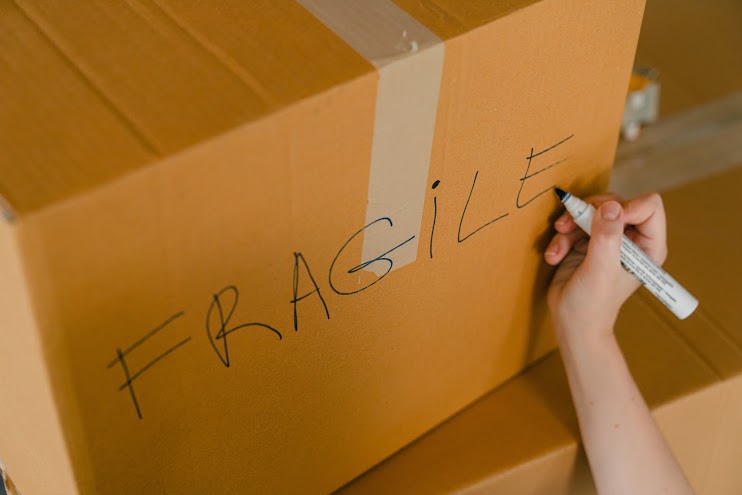
Labeling fragile items is crucial in the packing process. Use a bold marker or label maker to write “fragile” on multiple sides of the box, including arrows indicating which side should face upward. Consider using color-coded labels to indicate the level of fragility. This ensures that items are handled with care and arrive safely.

9. Load the boxes with care

Loading the moving truck properly is critical to prevent damage to fragile items during transport. Stack boxes containing delicate items on top of heavier and sturdier items to prevent crushing or damage. Take care when loading and unloading the boxes to avoid dropping or mishandling them.

10. Hire professional movers and packers

Consider hiring specialized movers and packers to help you if packing your delicate items overwhelms you. AJ Moving Services has years of experience packing fragile things for transfers of all sizes. So that you can experience a stress-free move, our team of experts can assist you with packing your delicate items safely and effectively.

Conclusion

In summary, packing fragile items for a move requires careful preparation and attention to detail. This guide has provided tips for assembling packing materials, preparing delicate items, wrapping and padding items, labeling boxes, and loading the moving truck carefully. By following these steps and taking precautions to protect fragile items, you can ensure your possessions arrive safely at their destination. 

Consider hiring professional movers and packers for added peace of mind and a stress-free move.

FAQs

1. How early should I pack my delicate belongings for a move?

A few weeks before your relocation date is an excellent idea to start packing your fragile belongings so you have enough time to box everything securely.

2. Is it okay to substitute old newspapers for packing paper?

Using old newspapers to pack fragile objects is an excellent idea, but they can leave ink stains. Instead, we advise using bubble wrap or packing paper.

3. How should I handle extremely large or bulky fragile items?

If you have any of these items, it is preferable to engage specialized movers and packers with experience moving large, fragile goods like antique furniture or artwork. They’ll have the know-how and tools required to transport your belongings safely.

4. Can I pack delicate products, among other items?

To protect your fragile items from damage during transit, it’s best to pack them separately from other items.

5. Can I pack my fragile stuff in old boxes?

It is advised to pack your fragile stuff in brand-new, robust boxes. Older boxes may need to be stronger to safeguard your belongings during transit.

References:

[1]  https://dumbomoving.com/blog/a-complete-guide-to-packing-fragile-items/

[2] https://shiftexperts.blogspot.com/2018/01/guide-on-handling-fragile-items-while-moving.html

[3]https://www.thepackersmovers.com/blog/10-useful-tips-for-packing-fragile-items-for-moving/

[4]https://www.800truck.ae/expert-advice-for-packing-fragile-heavy-bulky-items/

READ MORE
Two removal company workers unloading boxes from minibus into new home
Moving Tips
April 20, 2023

Moving to Frederick, MD: Tips for a Smooth Transition

Maryland is a famous American state bordering Virginia and Washington, DC, in the mid-Atlantic region. The state comprises many cities, but some are pretty prominent, and Frederick is one of them. In the north-central part of Maryland, Frederick is the largest county by area.

Moving to Frederick provides a picturesque downtown, vibrant culture, shopping venues, a stronger community, and outdoor recreational opportunities. According to the recent US census, the population in Frederick, MD, is 82,407, making it the second most populated city in the state and you should use professional movers frederick md. [1]

When relocating, there are various tasks at hand. But if there is a quick rundown list one can refer to last minute, things become a tad easier.

Tips for Moving to Frederick

From packing and organizing to finding the right movers and settling into your new home, these tips will make moving to Frederick a breeze.

1. Advance Planning Is Always Better

Procrastination is the most significant mistake people make when relocating. One should start planning their move as early as possible to prevent inconvenience.

Create a checklist outlining all the tasks you must complete before, during, and after the move. Some of the must-do tasks associated with relocation are packing, decluttering homes, collecting essential documents, and hiring professional movers.

When relocating with elderly family members, or kids, preparation is helpful and prevents them from feeling worried during the transition.

2. Research The City

Frederick is a densely populated city. Therefore, taking a detailed tour of the city is ideal before moving. You can ask your friends or family living there for detailed information. Or you may spare a weekend and take a road trip to your to-be home. This way, you’ll get a good guess about the nearby attractions, marketplaces, healthcare facilities, and commuting time.

Researching a bit on the neighborhood is also good. Is the area safe? What is the crime rate? Etc.  What things are illegal? Looking into nearby educational institutes is also essential if you are moving to Fredrick to raise a family.

3. Professional Movers Are Life-Savers

Most folks avoid hiring professional movers because of increased expenses. But in reality, professionals help you get a smooth and effortless move. You don’t have to drain yourself to keep things organized and smooth.

Another benefit of hiring professional movers is that they offer theft and damage protection to some extent. So if you are relocating from an area with theft issues, DIY-moving may require reconsideration. The best way to pin down your ideal movers is by obtaining and comparing quotes from different movers.

Tip: Moving companies charge lower on days with fewer demands, like mid-week or mid-month moves.

4. Decluttering Saves Money

Long-distance moving is exhausting, and getting an unexpectedly high moving bill makes things mind-numbing. Therefore, it is essential to declutter and downsize your household before moving to Frederick or any other place.

The best way to pinpoint unnecessary items is by analyzing each room and creating a list. Now you have to decide which items you can donate or trade in exchange for other things like packing supplies.

Of course, not all things will be in usable shape, so you may need to contact a disposal company as well. Some Frederick movers also offer disposal services, so it is better to research your options and choose the most suitable one.

5. Pack Strategically and Keep Things Green

According to research, about 16.8 billion pounds of trash [2] is produced in the moving sector, and considering the after-effects, it is essential to use eco-friendly packing supplies.

Moving to a new place can be daunting, but with some strategic planning and eco-friendly tips, you can make the transition smoother and more sustainable.

 When packing, think about what items you need and donate or recycle anything you don’t. Use reusable packing materials such as cloth bags, old towels, or blankets, and skip single-use plastic. 

When settling in your new home in Frederick, MD, consider implementing green habits such as composting, recycling, and conserving water to reduce environmental impact.

6. Notify The Utility Companies

Before moving to a new home, it’s essential to notify the utility companies to ensure a smooth transition and avoid unexpected disruptions. You’ll need to contact your gas, electric, water, and internet service providers to let them know your move-in date and set up new accounts if necessary. 

Confirming any outstanding balances or bills with these companies before you move is also a good idea to avoid any later surprises. By taking care of this essential step ahead of time, you’ll be able to enjoy a comfortable and hassle-free start in your new home.

7. Own A House Rather Than Rent One

When moving to Frederick, many people initially chose to rent a home to familiarize themselves with Maryland’s liveliest city. 

However, these may be more financially savvy decisions. The median home price in Frederick is around $277,000, significantly higher than the national average of $229,000. [3] While the price difference is evident, owning a home in Frederick can be a valuable investment. 

Recent studies show that house prices in Frederick are on the rise each year, and in some cases, real estate can provide a return of up to 30% in less than a year. Therefore, moving to Frederick may be the missing piece if you’re looking to invest in market-worthy real estate that needs to be included.

 Final Verdict

f you’re considering a move to Frederick, you’re making a great decision. The city offers an exceptional quality of life, excellent educational opportunities, and a thriving business community. However, to truly enjoy everything Frederick has to offer, having a successful and stress-free move is essential. The moving tips above cover everything from packing to settling into your new home. Following these fail-proof strategies will prepare you for a smooth transition to Frederick. And if you need additional assistance, countless moving companies in the area are ready to help you.

FAQs

1. Why is Maryland Frederick an excellent place to move?

Maryland Frederick offers a good quality of life, versatile job opportunities, and scenic views for outdoor recreation.

2. What is the unemployment rate in Maryland Frederick?

As compared to the national average, the unemployment range is 6.0%. While in Frederick, Maryland, the unemployment range is 5.4, which is lesser than in most Maryland cities.

3. What is the average income in Fredrick?

Frederick residents enjoy a good income of $32,751, while the average US income is about $32,751 annually. [5]

4. Which historic locations are in Frederick, Maryland?

Some of the most famous historic landmarks in Frederick, Maryland, include the Monocacy Aqueduct, Francis Scott Key Monument, National Shrine of St. Elizabeth Ann Seton, etc. [4]

References:

[1] https://worldpopulationreview.com/us-cities/frederick-md-population

[2] https://www.movebuddha.com/blog/moving-waste/#:~:text=An%20estimated%208.4%20million%20tons,absolutely%20epic%20amount%20of%20trash.

[3] https://zippyshelldmv.com/how-to-prepare-for-moving-to-frederick-md/

[4] https://www.visitfrederick.org/things-to-do/history-and-museums/historic-sites/

[5] https://www.bestplaces.net/economy/city/maryland/frederick

READ MORE
11 Apartment Moving Tips for a Seamless Move
Moving Tips
April 11, 2023

11 Apartment Moving Tips for A Seamless Move

Moving may seem exciting initially, but things get overwhelming and stressful when you begin the process. First, you must collect packing supplies, reduce your household to cardboard boxes, and then transport it to a new destination. But things don’t end there. There is an endless list of things to cross from your to-do list after you reach your destination. 

Although, everyone needs to put in their share of planning and organization when relocating. But a quick rundown of important helps you crosscheck that everything is covered. So, without any further delay, let’s get moving! Here are some great moving tips that can help.

1. Plan Ahead

Moving is not about randomly packing, transporting, and dumping your belongings from one place to another. A considerable share of planning and organization is required.

The best practice is to plan a month before the moving day. Plan about how to pick a good moving company, notify utility companies (of your moving), etc.

If you frequently shop online, you can also start collecting delivery boxes, which can be handy during the move. Also, if you have elderly parents or grandparents moving with you, you should start talking to them so that by the time the moving day arrives, they are mentally prepared because an abrupt move may inflict emotional hurt.

2.  Get An Estimate

The next thing is to calculate your budget. Several locally owned moving companies offer lesser price rates as well. But still, it is a clever play to get an estimate before. Many companies provide cost-estimating calculators, so there is no problem in getting an estimate nowadays.

The ideal practice is to get quotes from three movers and then pick the most suitable option. You can also opt for mid-week or mid-month moves as they are relatively inexpensive compared to weekends or moves reserved during the first week of the month.

3. Decluttering 

Decluttering before a move simplifies the packing process and helps you start fresh in your new home. Begin by categorizing your belongings into three groups: keep, donate, and discard. Assess each item’s value, usefulness, and emotional significance. 

Consider donating gently-used items to local charities, organizing a garage sale, or using online marketplaces to sell unwanted belongings. Discard broken or unusable items responsibly. Decluttering reduces the volume of items to pack, transport, and unpack, saving time, effort, and money. Embrace this opportunity to create a more organized and clutter-free living space in your new home.

4. The Russian Doll Technique

When it comes to moving, packing efficiently can save you both time and space. The Russian Doll technique is a valuable moving tip when organizing your belongings. Inspired by the traditional Russian nesting dolls, this method involves placing smaller items inside larger ones, ultimately reducing the number of boxes needed and optimizing the use of space.

This method is ideal for kitchenware, clothing, and other household items. It helps keep track of smaller items and provides extra cushioning. Always label boxes accurately, mentioning nested things for easy unpacking. 

5. Label Your Boxes

Packing is one portion of the story, while unpacking is another. So the clever thing is to work on both plots side by side. Not labeling or insufficiently labeling the boxes creates confusion. Therefore, it is ideal for labeling the boxes in detail. This way, there is no confusion when unpacking, and everything stays accounted for.

Labeling the boxes with fragile items is critical so there is no smashing and shattering during the packing and unpacking.

6. Pack An Essentials Box

An essentials box is a must-have for a stress-free moving experience. It contains items you’ll need immediately upon arrival at your new home, ensuring a comfortable transition. When packing your essentials box, include the following items:

  • Toiletries: Toothbrush, toothpaste, soap, shampoo, toilet paper, and towels.
  • Medications: Prescription, over-the-counter medications, and a basic first-aid kit.
  • Electronics: Chargers for phones, other devices, and any necessary work-related items.
  • Snacks and drinks: Non-perishable snacks, bottled water, and utensils.
  • Essential documents: Identification, passports, lease or purchase agreements, and insurance papers.
  • Pet supplies: Food, water bowls, and a toy or bed for your furry friend.
  • Bedding: Sheets, pillows, and a blanket for a comfortable first night’s sleep.
  • Essential tools: A flashlight, scissors, a box cutter, and a screwdriver for immediate needs.
  • Kids’ essentials: A favorite toy or book to keep children entertained and comforted.

Label the box clearly and load it last so it’s easily accessible upon arrival. By preparing an essentials box, you’ll ensure a smooth and organized start to your new life in your new home.

7. Hire Professional Movers

Hiring professional movers can significantly ease the moving process, saving time and effort. These experts have the skills and equipment to handle your belongings safely, minimizing the risk of damage. When selecting a moving company, research its reputation, read customer reviews, and request quotes from multiple providers. Ensure they’re licensed and insured, and ask about any additional fees. Book your movers well in advance, especially during peak moving seasons. Discuss any special requirements or fragile items beforehand. By hiring professionals, you can focus on other aspects of your move, such as settling into your new home and organizing utilities, with peace of mind.

8. Research Your New Neighborhood

Before moving, it’s essential to research and familiarizes yourself with your new neighborhood to ensure a smooth transition. Investigate nearby amenities such as grocery stores, pharmacies, hospitals, schools, and parks to understand the area’s convenience and accessibility. Assess commuting options, public transportation, and travel times to your workplace or other frequented destinations. 

Review crime rates and local news to gauge safety, and explore community events and facilities to connect with your neighbors. Additionally, consider visiting the neighborhood at different times of the day to experience its atmosphere first-hand. By comprehensively understanding your new surroundings, you’ll be better prepared to settle in comfortably and quickly.

9. Notify Your Utility Companies

Informing utility companies about your move is crucial for a seamless transition. Contact your current providers for electricity, gas, water, internet, and cable services at least two weeks before your move. Schedule disconnections the day after you leave and arrange connections at your new home before arrival. Remember to provide your new address for any final bills. Notifying utility companies in advance helps avoid unexpected charges, ensures uninterrupted service, and contributes to a stress-free moving experience.

10. Create An Inventory List

An inventory list is vital for organized packing and unpacking. Begin by categorizing your belongings room-by-room and listing all items within each category. Note any valuable or fragile items requiring special care. This list helps you estimate packing supplies, track belongings during the move, and efficiently unpack at your new home. Additionally, it serves as a reference for any insurance claims in case of loss or damage. An inventory list saves time and effort, making your move more manageable.

11. Take Breaks

During the moving process, taking breaks is essential to maintain your energy and prevent burnout. Schedule regular intervals to rest, hydrate, and have snacks or meals. Taking time to recharge allows you to stay focused, make better decisions, and avoid injuries from overexertion. Breaks also provide opportunities to bond with family and friends, making the moving experience more enjoyable. Remember, pacing yourself and allowing moments of relaxation can lead to a more efficient and successful move.

The Bottom Line

In conclusion, moving to a new apartment is an exciting and overwhelming life event. These helpful moving tips can make the moving process more manageable and less stressful. Plan, stay organized, and take breaks to maintain energy and focus. Prioritize your well-being and the well-being of your family members throughout the move, ensuring that everyone feels comfortable and prepared for this new chapter. With the right approach, you’ll enjoy a smooth transition into your new home, ready to create lasting memories in your new space. 

FAQS

1. How to speed up the packing process?

The best way to speed up the packing is to declutter beforehand. Taking out unwanted items does half the work. And then you only have to move from room to room and pack things up.

2. What should you not do when moving?

The one thing you should avoid is procrastinating. Start planning your move. Declutter, trade unnecessary items and set target dates to complete the tasks.

3. Can my move be less stressful?

Rushing things makes them stressful. The ideal practice is to start getting things done right away. Even if you are months away from moving, get going immediately by filtering and packing seasonal items.

4. What to do when professional movers are unpacking your stuff?

Sometimes seeing professionals unpack cardboard boxes in your new place can be overwhelming. You should get out, meet new neighbors or get a snack from nearby spots.

References: 

[1] https://www.move.org/moving-experience-survey-data/#:~:text=To%20help%20alleviate%20some%20stress,received%20their%20belongings%20on%20time.

[2] https://gofers.co.uk/packaging/pros-and-cons-of-different-packaging-fillers/

[3] https://www.jchs.harvard.edu/blog/who-is-moving-and-why-seven-questions-about-residential-mobility

READ MORE
Untitled-1 (1)
Moving Tips
March 4, 2023

What to Do While Movers are Working in Your Home?

Are you ready to embrace the chaos that comes with moving? You’re sitting in your living room, surrounded by more boxes than you thought possible, while the movers hustle and bustle around you. The sound of ripped tape and stacked boxes echoes through your home like a symphony of chaos. But don’t worry; this blog will help you make the most of this wild ride! According to recent statistics, the average person in the United States will move over 11.7 times in their lifetime [1]. That’s a lot of boxes to pack and unpack! Lucky for you, this blog has compiled a comprehensive list of things to do while moving companies are working their magic. So, let’s get started!

Movers in Your Home? Here’s What To Do

Here are a few things that you can do while moving companies are performing their moving services at your home. These things will save you time and help movers do their work without any hassle or distraction.

1. Sit Back and Relax

Moving day is finally here, and you’re excited to see the moving company in action. However, it’s important to remember that while you may have researched and hired the best movers (after going through so many moving companies in town), they still need space to work their magic. As tempting as it is to hover and watch, try to resist the urge and let the professionals do their job without any added pressure [2]. Remember, they have years of experience in moving help and know exactly what they’re doing. It’s also a good idea to stay alert and aware of their movements, so you can quickly answer any questions they have. But resist the temptation to micromanage every little detail. If you need to step out, let the movers know and securely lock up before you go.

2. Keep kids and pets occupied

If you are moving with kids or furry fellows, It’s essential to keep your little ones, and furry friends occupied and out of the way of the movers. Kids can be easily distracted by toys, games, or even a movie to watch. Set them up with their favorite activities in a separate room or take them out for fun. Similarly, pets can be kept occupied with their favorite toys, treats, or even a playdate with a friend or family member. Keeping your kids and pets occupied ensures the movers’ safety and helps them perform their moving services without distraction.

3. Stay organized

You’ve got one of the trusty moving companies on standby, but remember to keep things organized too. Labeling each box with what’s inside and which room it belongs to will make unpacking a breeze and will also help movers. After all, you don’t want to be scratching your head trying to figure out which box your favorite mug is in, do you? And let’s be honest; everyone has those special items that require extra TLC. So, create an inventory list of all your items, especially those that are fragile and valuable. You’ll thank yourself later when everything arrives in one piece.

To make things even more organized, don’t forget to pack an “essentials” box with all the things you’ll need. You know, the important stuff like your toothbrush, a change of clothes, and your morning cup of joe. Keep that box close by, and you’ll be good to go.

Note: Even the best movers have their limits! Remember that there are some things they can’t pack or move [5], like flammable or dangerous items. So pack those items separately and keep them out of the movers’ hands.

4. Avoid telling them continuously what to do

Local movers are there to help you with the tedious and laborious task of moving your belongings from one home to another. While they are working in your home, it can be tempting to give moving companies instructions on how to move things or how to do their jobs better. However, it is best to avoid this, as movers are well-trained professionals who handle your items safely and efficiently. If you have any specific requests, communicate them clearly before the job begins, but try not to micromanage the movers during the move. Not only could this slow down their progress, but it may also make them uncomfortable. Leave the hard work up to the moving help and stay out of their way!

5. Offer refreshments

Moving can be a rollercoaster of emotions; sometimes, it can feel like there’s no end in sight. That’s where your trusty moving services come in! But remember, these superheroes are working hard to ensure your belongings are safely transported to your new home. So why not show them some love by offering them a refreshing beverage or a snack? A gesture like this can go a long way in boosting their spirits and making the process even smoother. Moving help can be challenging, and a little appreciation can make all the difference.

6. Clean as they go

A clean home during your move is essential for successfully transitioning to your new location. To help keep your home clean while moving services are in progress, encourage movers to wipe their feet or remove their shoes before entering your home to help minimize dirt and debris. As the movers work in each room, take the opportunity to quickly clean and wipe down surfaces before the boxes and furniture are placed [4]. This will help you save a lot of time on cleaning afterward.

7. Take a break

When the moving services arrive and start packing up your belongings, it’s easy to get overwhelmed. After all, it can be a stressful experience to have your home filled with movers and boxes! That’s why taking a break for yourself during the move is essential.

The best way to give yourself some breathing room is to step outside for a few minutes. You don’t need to go far – get outside and enjoy the fresh air. Alternatively, you could use the break to do something calming, like reading a book or meditating. It will help you stay relaxed and reduce stress levels during the move.

8. Final touches

Before you close the door on your old home for the last time, remember those final touches. Make sure to thoroughly clean and vacuum your old home before the moving company packs up its truck. You want to leave your old home in good condition for the next occupants. Remember to check all the rooms and closets to ensure you don’t leave anything behind. And last but not least, take a moment to say goodbye to your old home and thank your moving company for all their hard work and professionalism. With these final touches, you can walk away from your old home feeling confident and ready to start a new chapter in your new home.

9. Help the movers

Professional moving companies are the unsung heroes of the moving world and showing them some appreciation can go a long way. So, what can you do to help out? First, communicate any special instructions or requirements beforehand so they can handle your belongings with care. Next, tipping your movers is a great way to say thanks – aim for 10-15% of the total cost [2]. And remember to leave a review online! Sharing your experience can help others make the right choice when choosing a moving company. Trust us, showing some love to your movers will make their day (and yours!) much better.

Conclusion

Moving services can be an invaluable source of help during your move. Following these tips and utilizing moving help will make moving to your new home much less stressful and more efficient. Moving day is about preparation, organization, and a positive attitude.

Prepare before the big day, ensuring you have everything packed and labeled. Remember to take care of yourself and your home by staying hydrated and giving yourself breaks when needed. And let’s remember those hard-working movers – lending a helping hand and showing them some appreciation can go a long way.

Now it’s time to take a deep breath and trust in the moving services to get you to your new home. With a little bit of preparation and a lot of positivity, your move can be a success! Happy moving!

FAQs

1. Am I supposed to help my movers?

No, you don’t need to help your movers, but if you want to, you can! Many moving services offer moving help and will appreciate it if you do your part by staying out of the way and keeping things organized while they’re working.

2. How do you deal with movers?

It’s essential to be respectful and understanding of your movers when they are working in your home. Make sure to keep a safe distance and always let them know if they need to be aware of something.

3. Do I need to empty drawers for movers?

Yes, it’s best to empty any drawers the movers will be handling, as this will make the job easier for them and reduce the risk of damage.

References:

[1]  https://www.census.gov/topics/population/migration/guidance/calculating-migration-expectancy

[2] https://www.thepinesatsouthmoor.com/10-things-you-should-do-while-movers-are-moving

[3]https://www.realsimple.com/work-life/tipping-movers#:~:text=A%20good%20rule%20of%20thumb,haul%20or%20a%20local%20move.

[4]https://centomoving.com/what-to-do-while-movers-are-moving/

[5] https://centomoving.com/things-moving-companies-wont-move

READ MORE
Untitled-1_01
Moving Tips
February 27, 2023

7 Typical Moving Company Scams and How to avoid them

Moving can be quite an adventure – a time for new beginnings, fresh starts, and new opportunities. But nobody looks forward to the stress and anxiety of the actual move. And the last thing you want is to be scammed by a moving company! 

Unfortunately, this is a reality many people face, and knowing how to protect yourself is essential. Did you know that in 2012 alone, the Federal Motor Carrier Safety Administration (FMCSA) received over 3,100 [7] complaints from consumers about moving companies? And that’s just the reported cases! In this article, we will expose some common moving company scams and, most importantly, share tips on how to avoid being scammed during your next move. Whether you plan to move soon or want to stay informed, keep reading to ensure your move is flourishing and you are dealing with a professional moving company!

Don’t Fall for These Moving Company Scams

Here are a few moving company scams you must be careful about! 

1. The Hostage Situation Scam

You’ve arrived at your new home, ready to unpack and settle in, but your moving company only unloads your belongings once you pay an additional fee that wasn’t in your initial agreement. This is a hostage situation scam, and it’s unfortunately all too common in the moving industry.

But fear not! You can protect yourself from this scam by having a written agreement with the moving company that clearly outlines all charges. This way, you have a paper trail to refer to in case of any disputes. 

Before signing any agreement, read through it carefully and ask any questions you may have. And keep a copy for yourself! Remember, the more detailed the deal, the better. This will ensure that everyone is on the same page and that there are no surprises or hidden fees. 

Remember, movers, aren’t allowed to hold your stuff hostage if you have paid 100% of the estimated as per your binding estimate or 110% of the estimated costs on your non-binding estimate. So, If you have paid your charges and they are still holding you, hostage, you can call the cops [1] without any second thought.

2. The Low-Ball Estimate Scam 

The low-ball estimate scam – one of the oldest tricks in the book! This scam happens when a moving company offers you an incredibly low estimate, only to add on later a bunch of extra charges that You didn’t include in the original quote [2]. Sneaky, right?

Let’s say you receive an estimated $1,000 to move your belongings across the country. That sounds like a great deal! But, when the moving company arrives to pick up your items, they suddenly inform you that you need to pay an extra $500 for packing materials and an additional $1,000 for fuel charges. Yikes!

To avoid this scam, as discussed earlier, always get a written estimate from the moving company that includes all charges, including any potential extra fees. 

Most of the time, this happens when someone booked a moving company online and was flattered by their lowball deals. So, ensure the company performs an in-home assessment before giving you an estimate. This way, the forecast will be based on the items being moved rather than a generic estimate that may need to be revised. By doing these things, you can ensure that you’re getting an accurate estimate and that there are no surprises on a moving day. 

3. The No-Show Scam 

Waiting for a moving company that never shows up is like waiting for a pizza that never comes. It’s a total bummer! Unfortunately, some shady moving companies use this tactic to exploit unsuspecting customers.

Leaving you stranded with all your boxes and furniture. It’s like being ghosted by someone you were supposed to meet up with – super frustrating and disappointing!

But don’t panic – If the company fails to show up. – contact them immediately to find out what’s happening. If you can’t reach them or they don’t explain satisfactorily, it’s time to find a new moving company and call the cops. Either way, it’s a significant inconvenience and can delay your moving timeline.

To avoid this scam:

  1. Do your due diligence when researching moving companies.
  2. Make sure that the moving company is registered under FMCSA [3].
  3. Review previous customer reviews and check their rating with the Better Business Bureau.
  4. Once you’ve found a reputable company, get everything in writing – including the moving date and time.

4. The Fake License Scam

Moving on, the fake license scam is what it sounds like – a moving company that claims to be licensed and registered but, in reality, is not. This can be a huge problem because if something goes wrong during your move, you may be unable to file a complaint or seek restitution. 

Let’s say you hire a moving company that claims to be licensed, registered with the Federal Motor Carrier Safety Administration (FMCSA), and has a US Department of Transportation (DOT) number. However, when you try to verify the information, you find out that the company still needs to be registered. Uh-oh!

How to be on the safe side?

To avoid this scam, ensure the moving company is licensed, registered with the FMCSA [4], and has a USDOT number. You can check this information by searching for the company on the FMCSA’s website. This will ensure that the company is legitimate and that you have some recourse if something goes wrong during your move. Be bold and ask for proof of registration – a reputable moving company will gladly provide it. 

5. The Packing Scam 

Moving can be stressful, and the last thing you want to worry about is falling victim to a packing scam. This is when a moving company overcharges you for packing services, either by inflating the number of items they pack or by charging you for supplies that You never used.

Let’s say you hire a moving company to pack up your belongings. The company charges you a flat fee of $1,000 for packing, but when you receive your bill, you notice that the company has charged you an additional $470 for packing supplies. When you inquire about the charges, the company claims they used more supplies than expected. But you don’t remember seeing many boxes or packing materials used.

How to avoid it?

Always ask for an itemized list of all packing fees before agreeing to the service to avoid this scam. This will help you avoid surprises when it comes time to pay the bill. 

6. The Insurance Scam 

Last on our list is the insurance scam, where a moving company offers insurance coverage that seems too good to be accurate but provides very little protection in the event of damage or loss.

For instance, imagine you hire a moving company that offers insurance coverage for your belongings during the move. However, when an item is damaged or lost, you discover that the insurance policy has a high deductible and only covers a small percentage of the item’s value, leaving you with a significant loss.

How to avoid it safely?

To avoid this scam, it’s crucial to understand the terms of the moving company’s insurance policy [6]. Before you sign any contract, ask for a clear explanation of what is covered and what is not. 

Additionally, you should research the moving company’s insurance provider and read reviews to ensure that the provider is reputable and has a good track record.

Consider purchasing additional insurance coverage from a third-party provider to supplement the coverage provided by the moving company. 

7. The Overweight Load Scam

You’re all set to move to your new place, but you quickly realize that the weight of your belongings is giving you a significant headache. That’s because some moving companies like to play dirty by packing your items in a way that exceeds the weight limit, which can result in a heftier bill than the one you were initially quoted. It’s like being stuck with a giant bag of rocks you never asked for!

What can I do to avoid this situation?

Firstly, hire a company that uses a certified scale to weigh your belongings before and after the move. This way, you’ll only be charged for what your items weigh and nothing more. 

You can even request a copy of the weight tickets, which the law requires. If the moving company gives you the runaround or refuses to provide this, it’s a surefire sign that they’re up to no good. So, feel free to look for a different and more trustworthy moving company.

Conclusion

In this blog, you’ve gained an insight into the seven most common moving company scams and the tips for avoiding them. To recap:

  • The Hostage Situation Scam – Ensure you have a written agreement outlining all fees with the moving company.
  • The No-Show Scam – Research the moving company before hiring them and confirm the moving date and time in writing.
  • The Bait-and-Switch Scam – Get everything in writing, including any promises or guarantees the moving company makes.
  • The Fake License Scam – Ensure the moving company is licensed and registered with the FMCSA and has a USDOT number.
  • The Packing Scam – Ask for an itemized list of all packing fees before agreeing to the service.
  • The insurance scam – Research the moving company’s insurance provider and read reviews to ensure that the provider is reputable and has a good track record.
  • The Overweight Load Scam – Hire a company that uses a certified scale to weigh your belongings before and after the move.

To ensure a safe and successful move, it’s essential to do your research and work with a professional moving company. Check their reviews, ask for references, and ensure they have valid licenses and insurance coverage. Remember, caution and skepticism can go a long way in protecting yourself from moving company scams.

FAQs

1. How can I avoid being scammed by a moving company?

Do your homework, read reviews, and ask for referrals from friends and family to prevent being duped by a moving company. Be wary of movers who demand sizable deposits or provide atypically low estimates. Get a written contract that details all the terms and costs of your move at all times.

2. What can you do if you get scammed by a moving company?

If a moving company defrauded you, you should file a complaint with the Federal Motor Carrier Safety Administration (FMCSA) and the Better Business Bureau (BBB). You can also consider contacting a lawyer or legal aid organization to help you pursue legal action and get compensation for any damages or losses.

3. How do you trust a moving company?

To trust a moving company:

  1. Start by conducting research and reading customer feedback.
  2. Check if they are licensed and registered with the FMCSA and have a USDOT number.
  3. Ask for references and check their credentials with the BBB.

A trustworthy moving company should be transparent about its pricing, services, and insurance policies.

References:

[1] https://www.move.org/movers-hold-things-hostage/

[2] https://www.imovenycmoving.com/post/how-to-recognize-a-lowball-estimate-from-movers

[3]https://www.fmcsa.dot.gov/sites/fmcsa.dot.gov/files/docs/Rights-and-Responsibilities-2013.pdf

[4]https://www.washingtonpost.com/lifestyle/home/when-youre-moving-interstate-beware-the-scammers/2020/08/03/3ae251c0-d0d7-11ea-8c55-61e7fa5e82ab_story.html

[5]https://www.pods.com/blog/2021/04/moving-scams-avoid-red-flags/

[6]https://homesenator.com/secret-ways-moving-companies-may-scam-you/

[7]https://www.fmcsa.dot.gov/newsroom/fmcsas-moving-fraud-task-force-shuts-down-five-companies-one-week

READ MORE
AJ-Mblog
Moving Tips
February 20, 2023

Moving with the kids? What to expect and how to cope?

 Are you feeling anxious about the thought of moving with kids? Don’t worry! This blog has you covered! We all know how overwhelming it can be to navigate the challenges of moving, especially with children in tow. In a study of 5000 children [3], researchers found that children over five years are significantly impacted by moving and experience more stress and emotional breakdown than children below 5.
But with the proper preparation and some know-how, you and your family can make the most of this new chapter in your family’s life by creating memories that will last a lifetime. In this blog post, you will find what to expect from your children during the move (age by age) and some helpful coping strategies to make the process less stressful for them. So, let’s dive in!

 Like adults, kids also go through an emotional roller coaster while moving. For them, leaving school, leaving friends, and changing surroundings are incredibly stressful. Here’s what you can expect and how to cope with their reactions, age by age.

What to Expect When Moving with Kids?

As discussed earlier, moving with kids can be both an exciting and stressful experience. You must manage your own emotions and anxieties about the move, and you must also cope with your children’s emotional and physical reactions. Here are a few things you can expect from them when preparing for a move (in general):

  • Fear and anxiety

Fear and anxiety are normal responses when moving to a new home, and taking the time to understand and acknowledge those feelings is essential. 

  • Anger and sadness

Your children may likely become angry or sad during the move, and it’s essential to provide a supportive environment to help them cope with those feelings.

  • Disruptive sleeping patterns

It’s common for children’s sleep patterns to be disrupted during a move, so creating a calming environment with familiar bedding and routines is essential. 

  • Changes in appetite 

Changes in appetite can also occur due to stress, so you must provide healthy meals and snacks to help your child maintain their energy levels. 

  • Bedwetting or regression

 In the case of toddlers, it’s also possible that bedwetting or regression in toilet training may occur due to the stressful situation, and it’s important to remain understanding and supportive.

How to Cope with Moving with Kids

Here’s how you can cope with moving with kids of different ages.

1. Moving with Babies and Toddlers 

Moving with babies and toddlers is relatively more straightforward than with children of other ages. However, little ones thrive on routine and familiarity, and any disruption can cause them stress and anxiety. To help ease the transition, here are some tips to keep your babies and toddlers comfortable and secure during the move:

  •  Stick to familiar routines as much as possible, including feeding and sleeping schedules
  • Pack a separate bag with your baby or toddler’s essentials, such as diapers, wipes, formula, and their favorite toys and blankets.
  • Keep your baby or toddler’s sleeping arrangements similar to their old space.
  • Make sure to childproof your new home before your little one arrives
  • Consider hiring a sitter or asking a family member to watch your baby or toddler on a moving day to keep them safe and secure

2. Moving with Preschoolers 

Preschoolers may be excited about the move but can be more vocal about their concerns and fears. Moving to a new home can be challenging for preschoolers, who may want to stay in their toys and favorite belongings. They may need help deciding what to pack and leave [4]. Also, they may feel that your frustration while moving is due to them. 

Here are some tips for how to handle the challenges that come with moving with preschoolers:

  • Talk to your preschooler about the move and ask them how they feel about it.
  • Involve your preschooler in the moving process, such as packing their toys and belongings. Also, let them know the benefits of sharing their belongings with others who may need them.
  • Keep the lines of communication open and answer any questions they may have.
  • Reassure your preschooler that they will still have familiar toys, books, and blankets in the new home.
  • Try to keep some familiar routines in place and establish new ones as soon as possible.

3. Moving with School-Aged Kids 

Moving with school-aged kids can be the most challenging, as they will likely be more invested in their friendships and school activities. Leaving their friends and surroundings can make them feel depressed.

Here are some tips for preparing your school-aged kids for the move and managing the challenges that come with it:

  • Involve your kids in the decision-making process and explain the reasons for the move.
  • Research the new school and share information about it with your kids.
  • Visit the new neighborhood and explore the community with your kids.
  • Talk to your kids about ways to make new friends and tell them they can still get in touch with old ones via Zoom or other apps.
  •  Stay in communication with your child’s teacher to help your child adjust to the new school routine.

Practical Tips for Moving with Kids

Here are some practical moving tips you may consider while moving with kids.

  • Packing and labeling

Moving with kids can be a chaotic experience. To keep things organized, label boxes and create a checklist of items that have been packed. This can also help keep track of toys and other items necessary for your children. Get them involved if you have older children by assigning them their boxes to pack and label.

  • Finding a new school

Start researching potential schools in your new area as soon as you know your moving date. Make sure to visit each school to get a feel for the environment and how it meets your family’s needs. Ask questions like what programs they offer, sports teams, or extra-curricular activities they provide.

  • Getting to know the new community

Take the time to explore your new surroundings and discover what your new city or town offers. You can look online for local attractions or activities such as parks, museums, or playgrounds that could be fun for the whole family. 

  • Hire Professional Movers

Hiring professional movers to help manage your move and make it easier is best. So you can focus and spend more time with your kids.

  • Creating a new routine

Having a sense of structure is important for all family members when dealing with the stress of a move. Try to establish a new daily routine as quickly as possible. This may include making dinner at a particular time every night or setting a bedtime that everyone in the family follows. It can also be helpful to create a regular schedule for homework and chores so everyone knows what is expected of them.

Conclusion

The process of moving can be difficult and exhausting for anyone, especially if you’re moving with kids or moving with elderly parents, as they are more prone to stress due to emotional attachment to their surroundings and leaving their best buddies. In this blog, you know some reactions of the kids with moving and sure-fire tips on coping with their stress and building a sense of empathy with them. 

FAQs

1. How long does it take kids to adjust to moving?

According to researchers, Adults and kids can often take as long as 16 months [2] to settle in a new place. While the more stressful time for some is two weeks before and after the move.

2. How do I help my child cope with moving?

To cope with your child moving, the best you can do is to spend more time with them [1] and let them know that you care about their emotions.

3. What age is the hardest for kids to move?

Children over the age of 5 have the most severe effects of moving. It is difficult for them to split with friends and adjust to a new school during this crucial developmental stage. 

References: 

[1] https://www.nytimes.com/2020/07/13/parenting/moving-tips-kids

[2]https://www.bekins.com/2013/04/08/understanding-children-moving-with-children-to-a-new-home

[3]https://www.reuters.com/article/us-health-kids-moving-idUSKCN0SV2JT20151106

[4]https://www.bekins.com/2013/04/08/understanding-children-moving-with-children-to-a-new-home/


READ MORE
  • 1
  • …
  • 5
  • 6
  • 7
  • 8

5.0 out of 330+ Reviews

View All Reviews

Quick Links

  • Home
  • About Us
  • Influencer Partnership
  • Gallery
  • Blog
  • Privacy Policy

Services

  • Local Moving
  • Long Distance
  • Hourly Labor Services
  • Apartment Moving
  • Last Minute Movers
  • Small Moves
  • Expert Packers & Movers
  • Senior Moving Services
  • Office Move
  • Student Movers
  • Disposal Removing Services

Moving Location

Maryland

Annapolis

Baltimore

Bethesda

Chevy Chase

Columbia

Frederick

Gaithersburg

Olney

Poolesville

Potomac

Rockville

New Market

Urbana

Clarksburg

Damascus

Maryland

Annapolis

Baltimore

Bethesda

Chevy Chase

Columbia

Frederick

Gaithersburg

Olney

Poolesville

Potomac

Rockville

New Market

Urbana

Clarksburg

Damascus

  • Washington DC
Virgina

Alexandria

Arlington

Fairfax

Chantilly

Charlottesville

Fredericksburg

McLean

Great Falls

Gainesville

Springfield

Tyson’s Corner

Richmond

Vienna

Leesburg

Sterling

Ashburn

Reston

Virgina

Alexandria

Arlington

Fairfax

Chantilly

Charlottesville

Fredericksburg

McLean

Great Falls

Gainesville

Springfield

Tyson’s Corner

Richmond

Vienna

Leesburg

Sterling

Ashburn

Reston

Contact Us

  • 6955 Regents Ct Apt 108, Frederick, MD 21703, United States
  • info@ajmovingservices.com
  • (301) 541-6793
  • Facebook
  • Instagram
Copyright © 2026 AJ Moving Services. All Rights Reserved.