
• Blogs
  • About Us
    • Influencer Partnership
  • Services
    • Local Moving
    • Long Distance
    • Hourly Labor Services
    • Apartment Moving
    • Last Minute Movers
    • Self-Storage
    • Small Moves
    • Expert Packers and Movers
    • Senior Moving Services
    • Office Move
    • Student Movers
    • Disposal Removing Services
  • Local
    • Maryland
      • Annapolis
      • Baltimore
      • Bethesda
      • Chevy Chase
      • Columbia
      • Frederick
      • Gaithersburg
      • Olney
      • Poolesville
      • Potomac
      • Rockville
      • New Market
      • Urbana
      • Clarksburg
      • Damascus
    • Washington DC
    • Virginia
      • Alexandria
      • Arlington
      • Fairfax
      • Chantilly
      • Charlottesville
      • Fredericksburg
      • McLean
      • Great Falls
      • Gainesville
      • Springfield
      • Tyson’s Corner
      • Richmond
      • Vienna
      • Leesburg
      • Sterling
      • Ashburn
      • Reston
  • Moving Tips
  • Blogs
  • About Us
    • Influencer Partnership
  • Services
    • Local Moving
    • Long Distance
    • Hourly Labor Services
    • Apartment Moving
    • Last Minute Movers
    • Self-Storage
    • Small Moves
    • Expert Packers and Movers
    • Senior Moving Services
    • Office Move
    • Student Movers
    • Disposal Removing Services
  • Local
    • Maryland
      • Annapolis
      • Baltimore
      • Bethesda
      • Chevy Chase
      • Columbia
      • Frederick
      • Gaithersburg
      • Olney
      • Poolesville
      • Potomac
      • Rockville
      • New Market
      • Urbana
      • Clarksburg
      • Damascus
    • Washington DC
    • Virginia
      • Alexandria
      • Arlington
      • Fairfax
      • Chantilly
      • Charlottesville
      • Fredericksburg
      • McLean
      • Great Falls
      • Gainesville
      • Springfield
      • Tyson’s Corner
      • Richmond
      • Vienna
      • Leesburg
      • Sterling
      • Ashburn
      • Reston
  • Moving Tips
Get Free Estimate
(301) 541-6793
Get Free Estimate
  • Blogs
  • About Us
    • Influencer Partnership
  • Services
    • Local Moving
    • Long Distance
    • Hourly Labor Services
    • Apartment Moving
    • Last Minute Movers
    • Self-Storage
    • Small Moves
    • Expert Packers and Movers
    • Senior Moving Services
    • Office Move
    • Student Movers
    • Disposal Removing Services
  • Local
    • Maryland
      • Annapolis
      • Baltimore
      • Bethesda
      • Chevy Chase
      • Columbia
      • Frederick
      • Gaithersburg
      • Olney
      • Poolesville
      • Potomac
      • Rockville
      • New Market
      • Urbana
      • Clarksburg
      • Damascus
    • Washington DC
    • Virginia
      • Alexandria
      • Arlington
      • Fairfax
      • Chantilly
      • Charlottesville
      • Fredericksburg
      • McLean
      • Great Falls
      • Gainesville
      • Springfield
      • Tyson’s Corner
      • Richmond
      • Vienna
      • Leesburg
      • Sterling
      • Ashburn
      • Reston
  • Moving Tips
  • Blogs
  • About Us
    • Influencer Partnership
  • Services
    • Local Moving
    • Long Distance
    • Hourly Labor Services
    • Apartment Moving
    • Last Minute Movers
    • Self-Storage
    • Small Moves
    • Expert Packers and Movers
    • Senior Moving Services
    • Office Move
    • Student Movers
    • Disposal Removing Services
  • Local
    • Maryland
      • Annapolis
      • Baltimore
      • Bethesda
      • Chevy Chase
      • Columbia
      • Frederick
      • Gaithersburg
      • Olney
      • Poolesville
      • Potomac
      • Rockville
      • New Market
      • Urbana
      • Clarksburg
      • Damascus
    • Washington DC
    • Virginia
      • Alexandria
      • Arlington
      • Fairfax
      • Chantilly
      • Charlottesville
      • Fredericksburg
      • McLean
      • Great Falls
      • Gainesville
      • Springfield
      • Tyson’s Corner
      • Richmond
      • Vienna
      • Leesburg
      • Sterling
      • Ashburn
      • Reston
  • Moving Tips
(301) 541-6793
Author: admlnlx
HomeadmlnlxPage 8
Main Image Small Moves, Big Impact- How to Hire Movers for a Small Move
Moving Tips
May 6, 2023

Small Moves, Big Impact: How to Hire Movers for a Small Move

Moving doesn’t have to be a traumatic or intimidating affair. Regarding small moves, using expert movers can significantly reduce your stress and improve the procedure’s effectiveness. However, finding the best movers for a little move can be difficult because not all movers are created equal. Here is some professional advice on hiring movers for a modest move that will make the process easy and stress-free.

What is a small move?

Before we go any further, let’s define what we mean by a “small move.” Instead of moving an entire household, a modest move often entails transferring a few objects, such as furniture, appliances, or boxes [1]. Small moves can be residential or commercial, local or long-distance.

1. Establish your needs

It’s critical to anticipate your demands while organizing a modest move. Determine how much material you need to move first. You might not require a big moving truck or a crew of movers if you are moving from a studio or a modest one-bedroom apartment. On the other hand, you might need to engage a professional moving company if you have several large pieces of furniture or delicate goods that need particular handling. You can begin looking for the best movers after you know your demands.

2. Research movers

Looking for regional firms focusing on minor moves while researching movers is crucial. These businesses frequently have more significant experience managing smaller removals and might offer more reasonable price alternatives. To learn more about their reputation, visit their websites and read consumer reviews. To protect your possessions throughout the relocation, it’s also critical to confirm that the movers are authorized and covered by insurance [2].

3. Get quotes

Make contact with the potential movers on your list and request quotes. Ensure to give them accurate moving-related information, including the number of boxes and any special needs. To be sure, you’re receiving the greatest deal possible for your money. It’s a good idea to compare quotations from multiple different businesses.

4. Examine their services

Make sure to inquire about their services when you contact the movers [3]. Do they provide services for unpacking and packing and offer packing materials like boxes and tape for moving and any handling expertise for delicate items? Knowing what services are included in the cost will help you decide if the movers are the best choice for your little relocation.

5. Read the contract

Make sure to carefully read any contract you have with the movers before signing it. Ensure the price is stated clearly and includes all your required moving services. Look out for additional costs or fees not disclosed in the quote. Before signing the contract, don’t hesitate to ask the movers questions or express any worries.

6. Getting ready for moving day

Being prepared is crucial on a moving day. To begin, neatly mark your boxes and arrange them by room. If you do this, the movers will find it simpler to unload and unpack your belongings at your new house. Remove any objects, including furniture or rugs, that could obstruct the movers. This will lessen the possibility of your possessions being harmed or the movers being hurt.

7. Continue to Communicate

Communicating with the movers at every stage of the transfer is vital. Any updates or modifications to your plans should be communicated to them. This will contribute to a simple and stress-free moving process. Ask the movers for help during the move if you have any questions or concerns.

Conclusion

In conclusion, hiring professional movers for a small move can provide many benefits, including reduced stress, greater efficiency, and better property protection. By choosing the right moving company, preparing for the move in advance, and taking steps to save money, you can make your small move go smoothly and with minimal hassle. Remember to compare quotes, declutter and organize your belongings, and communicate with the movers to ensure a successful move. With these tips and tricks, you can turn your small move into a big impact without breaking the bank or sacrificing peace of mind.

FAQs

1. How much does hiring movers for a simple move cost?

The price of hiring movers for a minor relocation can change depending on the distance, the quantity, and any unique needs of the move. To ensure you’re getting the best deal for your money, obtaining quotations from multiple businesses is crucial.[4]

2. Should I tip the movers for a small move?

Although it is not required, giving the movers a tip is customary in the moving business. Consider leaving a gratuity for the movers if you thought they did an excellent job for you as a token of appreciation.

3. What should I do if something breaks while we’re moving?

You should contact the moving company immediately to register a claim if any of your possessions are damaged during the transfer. Keep copies of all pertinent paperwork, including the contract and the inventory list, and photograph any damage you find.

4. How can I tell whether a mover has insurance and a license?

Asking a mover for their license and insurance details, which they should be prepared to supply, can allow you to determine whether they are licensed and insured.  

References:

[1] https://www.moving.com/tips/the-best-ways-to-handle-a-small-move/

[2] https://www.moveeast.com/moving-routes/all-you-need-to-know-about-small-moves/

[3] https://www.forbes.com/home-improvement/moving-services/how-to-hire-movers/

[4] https://www.forbes.com/home-improvement/moving-services/movers-and-packers-cost/#:~:text=On%20average%2C%20movers%20charge%20between,transportation%20fees%2C%20materials%20and%20gas

READ MORE
Main Image The Pros and Cons of Hiring Hourly Labor for Your Move
Moving Tips
May 6, 2023

The Pros and Cons of Hiring Hourly Labor for Your Move

Hiring professional moving help can help reduce the stress of moving. For individuals who require assistance with packing, loading, or unloading, hourly moving labor is a common choice. In this blog, we’ll discuss the benefits and drawbacks of hiring hourly moving labor so you can make an informed choice for your next move.

What is Hourly Moving Labor?

Professional moving services provide hourly moving labor, which can help you with different areas of your relocation while saving your moving cost. Regarding moving, some people or families may want to handle certain aspects of the process independently, such as packing or loading their belongings. However, they may still need help with heavy lifting, loading, and unloading. In these cases, hourly moving labor services can be a practical choice for getting the assistance they need while maintaining control over certain parts of the move. 

Hourly moving labor allows people to simply pay for the precise services they require, making it a cost-effective choice for individuals looking to save money on their move. Depending on your demands, several hourly moving labor providers offer flexible scheduling choices and can be hired for as few hours or as many as several days [1].

Pros of Hiring Hourly Moving Labor

Here are some benefits of hiring hourly moving labor services. 

1. Cost-effective

Hiring hourly moving labor can be a cost-effective option for those with limited budgets compared to full-service movers. With hourly labor, you only pay for the hours worked, potentially resulting in savings on your move.

2. Flexibility

Hiring hourly movers can offer more flexibility in managing your relocation process. By renting a moving truck or container and selecting the specific services you need, you can tailor the move to your requirements and financial constraints. This can be particularly useful if you have a limited budget and must maximize your resources.[2]

3. Customizable Services

One advantage of hiring hourly moving labor is the ability to customize your moving services to fit your budget. Since the labor is paid by the hour, you can hire workers for a few hours to handle specific tasks like heavy lifting or a full day to help with the entire move. This can help you optimize your moving expenses while getting your needed assistance.

4. Less Physical Adversity

Moving heavy objects can be physically demanding and risky without proper training and experience. Hiring movers with expertise can help you avoid strain and potential injury during your move. By entrusting your heavy lifting to professionals, you can focus on other aspects of your move and ensure a safer and smoother transition.

5. No Extra Charges

The pricing and hidden costs of hourly moving labor businesses are often transparent. As a result, you may avoid unforeseen costs and be confident in the price of your relocation.

Cons of Hiring Hourly Moving Labor

Here are some drawbacks of hiring hourly moving labor services. 

1. Dependence on Personal Truck

You are usually responsible for renting and driving the moving truck when you hire hourly moving labor. If you need access to a suitable vehicle or are uncomfortable driving a larger truck, this can add extra stress and logistical challenges to your move.

2. Limited Liability

When you hire hourly moving labor, you usually only pay for the labor itself, not any potential damages that may occur during the move. If your belongings are damaged or lost during the relocation, you may not have recourse for reimbursement or compensation.

3. No Packing Assistance

While hourly moving labor can help with heavy lifting and loading/unloading your belongings, they typically do not offer packing services. This means that you will need to pack your items yourself, which can be time-consuming and stressful, particularly if you need to become more experienced with packing fragile or valuable items.

4. Limited Insurance Coverage

While hourly moving labor companies may offer some insurance coverage for your belongings during transport, more is needed to protect your items in case of damage or loss fully. This could leave you with unexpected costs and headaches if something goes wrong during your move.

5. Increased Stress and Workload

Hiring hourly moving labor requires more coordination and planning, which can increase stress and workload. You must manage and supervise the movers, rent and drive the moving truck, and pack and organize your belongings. This can be overwhelming, particularly if juggling other responsibilities, such as work or family obligations.

Conclusion

In conclusion, it is essential to carefully weigh the potential benefits and drawbacks before selecting whether to hire hourly moving labor for your relocation. Hourly labor for moving may be more flexible and less expensive than hiring a full-service moving company, but it also demands more work from you. It may provide a different level of protection for your possessions. Additionally, the labor quality can vary. Therefore it’s critical to research and picks a trustworthy moving service. Ultimately, the choice will depend on your requirements, spending capacity, and preferences [4]. Making a well-informed decision after assessing the advantages and downsides can help you move successfully and without worry.

FAQs

1. What characteristics should I look for in hourly moving labor?

Find a reputable, licensed, insured moving company or labor-only moving service. Read reviews and ask for referrals from friends and relatives.

2. How much does hourly moving labor cost?

Hourly labor costs for moving can change depending on the company, the area, and the services offered. However, the hourly rate, on average, ranges from $25 to $30.

3. What distinguishes hourly movers from full-service movers?

A full-service moving business offers all the services required to transfer your possessions, including packing, loading, driving, unloading, and unpacking. Hourly moving labor, on the other hand, just offers labor services. Therefore you must hire and drive your moving truck or make other arrangements for that service.

4. Can I hire moving help hourly for a long-distance move?

Yes, you can hire hourly movers for a long-distance move, but bear in mind that extra expenses, like the workers’ travel costs or overnight lodging, might be involved.

References:

[1] https://www.moving.com/tips/should-you-hire-day-labor-to-help-you-move/

[2] https://www.betterup.com/blog/is-hourly-or-salary-better

[3] https://spydermoving.com/pros-and-cons-of-hiring-moving-labor/

[4] https://www.mymovingreviews.com/move/pros-and-cons-of-hiring-movers/ 

READ MORE
Packing Fragile Items for a Move-A Guide by Expert Movers and Packers
Moving Tips
April 27, 2023

Packing Fragile Items for a Move-A Guide by Expert Movers and Packers

Relocating to a new house is exciting but can also be stressful, particularly when packing sensitive items. Picture yourself in the middle of a move, staring at your prized vase or vintage figurine and wondering how you might safeguard it. Fortunately, you can relax knowing that your delicate possessions will be safely carried to your new home with the assistance of skilled movers and packers.

At AJ Moving Services, we recognize the significance of careful handling when transporting delicate belongings. To assist you in the packaging of your fragile possessions for your relocation, our team of knowledgeable packers and movers has put together a small guide. So, take a seat back, unwind, and let us help you pack fragile goods for your relocation.

How to Pack Fragile Items For a Move?

Here are some tips for packing delicate items for a move. 

1. Assemble the necessary packing materials

For proper packaging of your delicate items, ensure you have all the necessary items before packing[1].

Some of the essential packing items include: 

  • Bouncy tape
  • Packing material
  • Wrapping paper 
  • Markers
  • Newspapers
  • Foams
  • Polythene bags
  • Towels
  • Carton boxes

2. Prep your fragile items

To prepare delicate items for a move, gather packing supplies and sort items by fragility and size. Label each box with contents, and take precautions such as wrapping glassware individually in bubble wrap and filling gaps with packing peanuts or paper.

3. Wrap the delicate items

Use bubble wrap or packing paper to wrap delicate items, and secure them with tape. For sharp items, use corner protectors—Disassemble electronics or moving parts and label them for easy reassembly. Pack in sturdy boxes. Take your time and handle items gently to prevent damage.

4. Pad and fill empty spaces 

To prevent damage to delicate items during transport, it’s essential to pad and fill any empty spaces in the box. Use Styrofoam peanuts or crumpled packing paper to fill gaps and ensure that items fit snugly in the box. Avoid overpacking and seal the box with packing tape. This helps ensure the safe arrival of your items.

5. Reinforce the bottom of moving packages 

To prevent boxes from splitting open during transport, reinforce the bottom with packing tape strips in an “H” pattern. Use high-quality tape and add more strips for heavy items. Wrap each item individually, add padding, and seal with tape.

6. Place bulkier objects at the bottom

When packing delicate items, place bulkier objects at the bottom of the box for a solid foundation. Stack smaller and lighter things on top to distribute weight evenly and reduce the risk of damage. Avoid overpacking and stay within the weight limit of the box.

7. Use dividers 

When packing delicate items like glassware or stemware, it’s essential to use specialized glass separators or stemware packages in addition to dividers. These provide an extra layer of protection and prevent items from touching each other. Be sure to wrap each item individually, fill gaps with padding material, and handle items gently.

8. Label the boxes

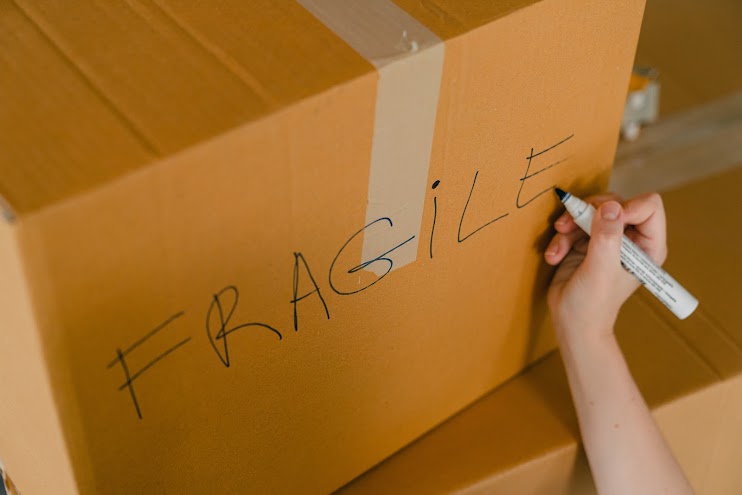
Labeling fragile items is crucial in the packing process. Use a bold marker or label maker to write “fragile” on multiple sides of the box, including arrows indicating which side should face upward. Consider using color-coded labels to indicate the level of fragility. This ensures that items are handled with care and arrive safely.

9. Load the boxes with care

Loading the moving truck properly is critical to prevent damage to fragile items during transport. Stack boxes containing delicate items on top of heavier and sturdier items to prevent crushing or damage. Take care when loading and unloading the boxes to avoid dropping or mishandling them.

10. Hire professional movers and packers

Consider hiring specialized movers and packers to help you if packing your delicate items overwhelms you. AJ Moving Services has years of experience packing fragile things for transfers of all sizes. So that you can experience a stress-free move, our team of experts can assist you with packing your delicate items safely and effectively.

Conclusion

In summary, packing fragile items for a move requires careful preparation and attention to detail. This guide has provided tips for assembling packing materials, preparing delicate items, wrapping and padding items, labeling boxes, and loading the moving truck carefully. By following these steps and taking precautions to protect fragile items, you can ensure your possessions arrive safely at their destination. 

Consider hiring professional movers and packers for added peace of mind and a stress-free move.

FAQs

1. How early should I pack my delicate belongings for a move?

A few weeks before your relocation date is an excellent idea to start packing your fragile belongings so you have enough time to box everything securely.

2. Is it okay to substitute old newspapers for packing paper?

Using old newspapers to pack fragile objects is an excellent idea, but they can leave ink stains. Instead, we advise using bubble wrap or packing paper.

3. How should I handle extremely large or bulky fragile items?

If you have any of these items, it is preferable to engage specialized movers and packers with experience moving large, fragile goods like antique furniture or artwork. They’ll have the know-how and tools required to transport your belongings safely.

4. Can I pack delicate products, among other items?

To protect your fragile items from damage during transit, it’s best to pack them separately from other items.

5. Can I pack my fragile stuff in old boxes?

It is advised to pack your fragile stuff in brand-new, robust boxes. Older boxes may need to be stronger to safeguard your belongings during transit.

References:

[1]  https://dumbomoving.com/blog/a-complete-guide-to-packing-fragile-items/

[2] https://shiftexperts.blogspot.com/2018/01/guide-on-handling-fragile-items-while-moving.html

[3]https://www.thepackersmovers.com/blog/10-useful-tips-for-packing-fragile-items-for-moving/

[4]https://www.800truck.ae/expert-advice-for-packing-fragile-heavy-bulky-items/

READ MORE
Two removal company workers unloading boxes from minibus into new home
Moving Tips
April 20, 2023

Moving to Frederick, MD: Tips for a Smooth Transition

Maryland is a famous American state bordering Virginia and Washington, DC, in the mid-Atlantic region. The state comprises many cities, but some are pretty prominent, and Frederick is one of them. In the north-central part of Maryland, Frederick is the largest county by area.

Moving to Frederick provides a picturesque downtown, vibrant culture, shopping venues, a stronger community, and outdoor recreational opportunities. According to the recent US census, the population in Frederick, MD, is 82,407, making it the second most populated city in the state and you should use professional movers frederick md. [1]

When relocating, there are various tasks at hand. But if there is a quick rundown list one can refer to last minute, things become a tad easier.

Tips for Moving to Frederick

From packing and organizing to finding the right movers and settling into your new home, these tips will make moving to Frederick a breeze.

1. Advance Planning Is Always Better

Procrastination is the most significant mistake people make when relocating. One should start planning their move as early as possible to prevent inconvenience.

Create a checklist outlining all the tasks you must complete before, during, and after the move. Some of the must-do tasks associated with relocation are packing, decluttering homes, collecting essential documents, and hiring professional movers.

When relocating with elderly family members, or kids, preparation is helpful and prevents them from feeling worried during the transition.

2. Research The City

Frederick is a densely populated city. Therefore, taking a detailed tour of the city is ideal before moving. You can ask your friends or family living there for detailed information. Or you may spare a weekend and take a road trip to your to-be home. This way, you’ll get a good guess about the nearby attractions, marketplaces, healthcare facilities, and commuting time.

Researching a bit on the neighborhood is also good. Is the area safe? What is the crime rate? Etc.  What things are illegal? Looking into nearby educational institutes is also essential if you are moving to Fredrick to raise a family.

3. Professional Movers Are Life-Savers

Most folks avoid hiring professional movers because of increased expenses. But in reality, professionals help you get a smooth and effortless move. You don’t have to drain yourself to keep things organized and smooth.

Another benefit of hiring professional movers is that they offer theft and damage protection to some extent. So if you are relocating from an area with theft issues, DIY-moving may require reconsideration. The best way to pin down your ideal movers is by obtaining and comparing quotes from different movers.

Tip: Moving companies charge lower on days with fewer demands, like mid-week or mid-month moves.

4. Decluttering Saves Money

Long-distance moving is exhausting, and getting an unexpectedly high moving bill makes things mind-numbing. Therefore, it is essential to declutter and downsize your household before moving to Frederick or any other place.

The best way to pinpoint unnecessary items is by analyzing each room and creating a list. Now you have to decide which items you can donate or trade in exchange for other things like packing supplies.

Of course, not all things will be in usable shape, so you may need to contact a disposal company as well. Some Frederick movers also offer disposal services, so it is better to research your options and choose the most suitable one.

5. Pack Strategically and Keep Things Green

According to research, about 16.8 billion pounds of trash [2] is produced in the moving sector, and considering the after-effects, it is essential to use eco-friendly packing supplies.

Moving to a new place can be daunting, but with some strategic planning and eco-friendly tips, you can make the transition smoother and more sustainable.

 When packing, think about what items you need and donate or recycle anything you don’t. Use reusable packing materials such as cloth bags, old towels, or blankets, and skip single-use plastic. 

When settling in your new home in Frederick, MD, consider implementing green habits such as composting, recycling, and conserving water to reduce environmental impact.

6. Notify The Utility Companies

Before moving to a new home, it’s essential to notify the utility companies to ensure a smooth transition and avoid unexpected disruptions. You’ll need to contact your gas, electric, water, and internet service providers to let them know your move-in date and set up new accounts if necessary. 

Confirming any outstanding balances or bills with these companies before you move is also a good idea to avoid any later surprises. By taking care of this essential step ahead of time, you’ll be able to enjoy a comfortable and hassle-free start in your new home.

7. Own A House Rather Than Rent One

When moving to Frederick, many people initially chose to rent a home to familiarize themselves with Maryland’s liveliest city. 

However, these may be more financially savvy decisions. The median home price in Frederick is around $277,000, significantly higher than the national average of $229,000. [3] While the price difference is evident, owning a home in Frederick can be a valuable investment. 

Recent studies show that house prices in Frederick are on the rise each year, and in some cases, real estate can provide a return of up to 30% in less than a year. Therefore, moving to Frederick may be the missing piece if you’re looking to invest in market-worthy real estate that needs to be included.

 Final Verdict

f you’re considering a move to Frederick, you’re making a great decision. The city offers an exceptional quality of life, excellent educational opportunities, and a thriving business community. However, to truly enjoy everything Frederick has to offer, having a successful and stress-free move is essential. The moving tips above cover everything from packing to settling into your new home. Following these fail-proof strategies will prepare you for a smooth transition to Frederick. And if you need additional assistance, countless moving companies in the area are ready to help you.

FAQs

1. Why is Maryland Frederick an excellent place to move?

Maryland Frederick offers a good quality of life, versatile job opportunities, and scenic views for outdoor recreation.

2. What is the unemployment rate in Maryland Frederick?

As compared to the national average, the unemployment range is 6.0%. While in Frederick, Maryland, the unemployment range is 5.4, which is lesser than in most Maryland cities.

3. What is the average income in Fredrick?

Frederick residents enjoy a good income of $32,751, while the average US income is about $32,751 annually. [5]

4. Which historic locations are in Frederick, Maryland?

Some of the most famous historic landmarks in Frederick, Maryland, include the Monocacy Aqueduct, Francis Scott Key Monument, National Shrine of St. Elizabeth Ann Seton, etc. [4]

References:

[1] https://worldpopulationreview.com/us-cities/frederick-md-population

[2] https://www.movebuddha.com/blog/moving-waste/#:~:text=An%20estimated%208.4%20million%20tons,absolutely%20epic%20amount%20of%20trash.

[3] https://zippyshelldmv.com/how-to-prepare-for-moving-to-frederick-md/

[4] https://www.visitfrederick.org/things-to-do/history-and-museums/historic-sites/

[5] https://www.bestplaces.net/economy/city/maryland/frederick

READ MORE
12 Best Places to Move in Maryland – Maryland Movers Guide
Moving Tips
April 14, 2023

Moving to Virginia 10 Pros and Cons

Moving to a new state can be an exciting and challenging experience. Everyone is eager to know their new neighbors, witness the scenery, and experience novel cultural values. Virginia offers a vibrant culture, breathtaking landscapes, rich history, and other exceptional pros. Many immigrants claim that moving to Virginia has been a life-changing decision.

The state has a strong economy, less to negligible crime rate, and first-hand healthcare. You’ll also find unique cuisines, job markets, and shopping venues. This post explores the pros and cons of living in Virginia. After reading, you’ll know whether Virginia can be your dream homeland.

Pros of Moving to Virginia

Moving to Virginia offers a lot of perks. Here is a list of the most evident ones.

1. Historical Significance

Virginia has a rich history dating back to the colonial period. The state was one of the first settlements of colonists and housed the initial governing body.

There are great historic sites for touring. But the Virginia Museum of History and Culture and Manassas Battlefield are the two most famous tourist attractions [1]. The state also served as the battleground for two of the most iconic wars, the Civil War and the American Revolution, which strengthened the military influence in the area.

2. Landscape Beauty

If you are an outdoor enthusiast, moving to Virginia will be the best decision you’ll ever make. You can undertake diverse activities, from hiking to caving to climbing and canoeing. Additionally, you can visit the Blue Ridge Mountains, the Appalachian Mountains, and Shenandoah Valley.

Virginia also welcomes nature lovers warmly; the Shenandoah National Park and the Skyline Drive are popular destinations offering breathtaking views of the mountains and valleys.

3. Moving To Virginia Brings Safety

Safety is one of the significant highlights of moving to Virginia. Due to a strong military presence, the state offers a meager crime rate. There are about 27 military bases within the state, so if you are sensitive about an invasion, or a zombie apocalypse, Virginia is your best shot.[1]

Owing to the solid military culture in the state, there are about 60,000 veterans living in Virginia state which makes up about 10 percent of the state’s population.

4. Political Stability

Political racket is a common issue and one of the major concerns among the moving folks. However, if you are living in Virginia, you can stay relieved as the state is politically moderate. The folks of Northern Virginia are more into literacy, while the people of Southern Virginia are more into conservativeness. These diverse political interests make it a swing state.

Thanks to the political inclination of the state, you get to experience various political ideologies and participate in campaigns.

5. Education

Virginia is home to several prestigious universities and colleges, which makes it occupy a high place on every mover’s link. Thanks to the top-class education system, Virginia has the highest graduation rates in the USA.

Therefore, it makes the perfect place to call home whether you want to relocate for a pre-high or a post-high school education. Some of Virginia’s most popular schools include Old Dominion, Graham, and Kingston Elementary. Additionally, the University of Virginia, Virginia Tech, and George Manson University offer remarkable opportunities for pursuing higher education.

6. Job Opportunities

The state is home to several major employers, including the federal government, defense contractors, and technology companies, providing a stable job market and potential for career growth.

Due to the strong employment hub, the state has a significantly lower unemployment rate than the national average. If you are interested in finding employment under a governmental official, there are about 27 bases, while the state also houses more than 500 private-owned companies. [2]

If Virginia’s job market is different from your liking, the state’s proximity to Washington, D.C., offers an endless job market as well. You can also relocate your office to the state to increase community-specific leads.

Cons Of Moving to Virginia

While Virginia is an exceptional place to live, there are some things that one must be aware of to decide whether Virginia can serve as a potential home for them.

1. Higher Taxes

Where the cost of living in Virginia is relatively lower, the taxation will drain the money you saved from residency. According to the GoBankingRates list, Virginia ranked seventh with the highest taxes. [4]

2. Unpredictable Weather

Commonly the state experiences hot and humid weather. But it can be reasonably unpredictable as well. Residents have claimed to observe about a 30 F change in temperature within the same day. The climate of the place also depends upon your residency spot. For instance, the summer weather can be significantly humid and hot if you live near the coast.

If your new home is in the coastal region, the winter may be an excellent time to relocate rather than spring or summer.

3. Traffic

Another con you should know before moving to Virginia is that the traffic could be more generous here. Residents face serious traffic jams in dense population areas. On average, a traffic jam lasts about 30 minutes and is six miles long.

Although the state is closer to Washington, DC, reaching DC may also mean staying in traffic for hours. Therefore, it is ideal for checking traffic updates before leaving for your weekend getaway.

4. Unbelievable Laws

Swearing is illegal in Virginia, and until July 2020, the deed was punishable with a fine of 250 dollars. The illegality of swearing is still understandable, but several other strange regulations exist.

For instance, driving by the same place in under 30 minutes is illegal, per Virginia’s Atlantic Ave. So it is a red alert that you should hire a professional moving company to deliver your belonging rather than getting fined. Similarly, deciding who will pay the bill by flipping a coin is illegal in Richmond.[4]

5. Limited Transportation

Although the transportation system within the cities is excellent, the same doesn’t remain true for outer areas. So as soon as you are out of the populated premises of Virginia, public transportation will become extinct. If you are a travel enthusiast and plan to tour from city to city, you must purchase a car before moving to Virginia.

Conclusion

Virginia is a beautiful place to call home. But knowing about the highs and lows is essential if you decide to relocate. Moving to Virginia offers many benefits, from top-class education, historical prominence, job opportunities, and a lesser crime rate. It is a great place for financial growth or starting a family.

However, there are some downsides as well. For instance, the traffic jams are nerve-racking, the taxes are inescapable, and the unavailability of public transit outside the cities is frustrating. So it is essential to cross-check that you-specific facilities are present in the area you want to relocate to.

FAQs

1. Why is Virginia an excellent place to live in?

Virginia ranks as the country’s 10th safest state. Moreover, you’ll find high-class educational institutes and healthcare facilities here.

2. Which are the most popular cities in Virginia?

The most famous cities of the state include Richmond, Alexandria, Williamsburg, Norfolk, etc.

3. Which cities in Virginia are the most affordable?

The overall cost of living in Virginia is relatively higher. But some cities are still pocket-friendly, like Petersburg, Roanoke, Vinton, etc. [3]

4. Which Virginia city has the lowest cost of living?

A small town named Maxton in North Carolina has a significantly lower living cost. But one needs to know the availability of the job market and other facilities.

References:

[1] https://morethanjustparks.com/historic-sites-in-virginia/

[2] https://retirepedia.com/25-pros-and-cons-of-living-in-virginia.html

[3] https://www.rent.com/blog/cheapest-places-to-live-in-virginia/

[4] https://honestproscons.com/pros-and-cons-of-living-in-virginia/

READ MORE
Moving to Virginia 10 Pros and Cons
Moving Tips
April 14, 2023

12 Best Places to Move in Maryland – Maryland Movers Guide

Maryland, or Little America, resides in the heart of the mid-Atlantic region. The state occupies 32,134 km² of U.S. soil, thriving with historic charm, full of go cities, scenic waterfronts, and rich culture. Although, the diversified and alluring aspects of the metropolis make it a great place to call home. But deciding the right place to settle before a team of Maryland movers arrives at your place is essential.

The state was home to many famous writers, politicians, and artisans. Moreover, it housed the first umbrella factory, high-quality schools, and incredible shopping destinations. Livestock and harvesting are significant sources of Maryland’s economic income.

So, whether you’re a family looking for top-notch schools or a retiree searching for a tranquil retreat, Maryland offers something for everyone. Here are the top 12 places to settle.

1. Bethesda

Bethesda is a bustling urban center offering a good living standard. The city has excellent schools, top-notch medical facilities, and fantastic shopping options. Some of the renowned parks include Cabin John Regional Park.

The crime rates are meager, making it an ideal place for raising children, including top-ranking public and private schools, numerous recreational opportunities, and diverse food cuisines. The metropolis’s proximity to Washington, D.C., makes it an excellent location for capital job-holding individuals preferring a quieter and suburban lifestyle.

2. Annapolis

A historic city located in the Chesapeake Bay and a worthy location to ask Maryland movers to drop you at. Annapolis is famous for stunning architecture, excellent seafood, and vibrant nightlife.

The residents can access many water-based activities, such as boating, fishing, and sailing. Alongside housing more than 40,000 people [1], Annapolis also offers excellent schools, art galleries, theaters, museums, and downtown shops and restaurants. Located between Baltimore and Washington, it is an ideal place for commuters.

3. Baltimore

Baltimore is famous for its crab cakes and has a historical reputation as the birthplace of the national anthem. Some other attractions include Inner Harbor, Camden Yards, and the National Aquarium. The city boasts thriving arts and culture scenes, theaters, and music venues, making it a perfect home for outdoor enthusiasts.

It makes a great innovation and research hub for numerous top-ranked universities and healthcare systems. Baltimore’s proximity to Washington, D.C., and other major cities on the East Coast makes it an ideal location for both work and leisure.

4. Columbia

Columbia is world famous for its music and entertainment possibilities. The marvelous work of the great architect, the Merriweather Post Pavilion, has hosted many musical and entertainment festivals.

The city has a population of about 105,086 and offers many coffee shops and parks.[2] Thanks to the diverse and thriving economy, there is a considerable healthcare, government, and technology job market. Columbia also boasts a strong sense of community, with numerous events and festivals. The city is also famous for its incredible food and emeralds. [2]

5. Rockville

Do you have a knack for seasonal entertainment? Rockville’s lawns and ice-skating rinks are worth a try. The city is famous for its diverse employment hub, restaurants, coffee shops, and recreational facilities, occupying about 35.33 km² of American soil, 

The city is close to several reputable highways and public transportation, making commuting easier in bigger cities. The 75 acres of the famous Lake Needwood make it an ideal settling spot for fishing and swimming enthusiasts.

6. Silver Spring

Silver Spring is a vibrant city worth living in. Apart from its recreational and cultural aspects, the city houses the headquarters of the National Association of the Deaf and the famous Capital Trolley Museum.

Moving to silver springs brings a great downtown, incredible cafes, restaurants, and an excellent job market. Although commuting is relatively longer, studies show that about 30 percent of households are car-free because of good public transportation and the city’s walkability. [3]

7. Ellicott City

Ellicott City is a historic town in the rolling hills of central Maryland. Here you’ll find historic districts boasting 19th-century architecture, unique restaurants, and quaint shops. All these beauties are lined with natural sceneries, including recreational parks, hiking trails, and the Patapsco River.

Convenient highways, farmers’ markets, cultural festivals, art shows, and a low crime rate make it an excellent place to relocate to with professional Maryland movers.

8. Frederick

Frederick is a city that precedes its reputation worldwide with its monumental civil war sites and a skyline enriched with mountain tops. The city is primarily famous for its beautiful downtown area, excellent schools, and numerous cultural attractions.

In addition to the entertainment and rich cultural facets, Frederick has excellent schools, a low unemployment rate, and a diverse range of job opportunities. However, the living costs are 40% higher than the average national living expenses. [4]

9. Ocean City

Ocean City is a popular tourist destination offering its residents an excellent quality of life. The town is situated along the Atlantic coast and boasts miles of beautiful beaches and boardwalks, making it a paradise for beachgoers and water enthusiasts.

In addition to its natural beauty, Ocean City has a wide range of restaurants, shops, and entertainment options catering to residents and tourists. The town also hosts numerous festivals and events throughout the year, including concerts, art shows, and parades.

10. Hagerstown

Hagerstown’s low cost of living makes it an affordable option for those seeking a quieter lifestyle. You’ll find your fill of outdoor recreational activities along with several high-class colleges and universities.

The community is expanding, and job opportunities are popping up every year. Hagerstown’s location at the crossroads of several major highways provides easy access to nearby cities and attractions.

11. Gaithersburg

Gaithersburg is a thriving city that offers residents a high standard of living. The city is known for its excellent schools, fantastic shopping venues, incredible housing options, and numerous parks.

The city’s inclinations for numerous technology companies and the biotech industry provides excellent job opportunities. Gaithersburg is conveniently located near major transportation routes, making it easy to access Washington, D.C., and other major cities.

12. Bel Air

Bel Air is a picturesque town with charm and access to modern amenities in the heart of Harford County. The environment is safe and family-friendly, with excellent schools and numerous parks and recreational areas.

Bel Air has a thriving downtown area with unique shops, restaurants, and community events. The city’s nearness to significant highways provides easy access to nearby cities such as Baltimore and Philadelphia. With a moral sense of community and a low crime rate, Bel Air is a welcoming place for residents of all ages.

The Bottom Line

Maryland is one of the most bustling states in America. There are many cities worth living in in the state. However, deciding the perfect place before hiring Maryland movers is daunting. To ease your trouble, we compiled the top cities in Maryland for you in this blog.

When choosing a city, remember to look for an excellent job hub, commuting facilities, residency costs, weather, and crime rate. Every city has its pros and cons. But conducting steady and thorough research will help you find the perfect destination.

FAQs

1. Are there disadvantages to living in Maryland state?

Maryland proves relatively more expensive than other states. Moreover, limited transportation outside some cities can be an issue as well.

2. How much income is necessary to live in Maryland state?

The average salary for an adequate lifestyle is about $47,161 a year.

3. Why is Maryland worth living in?

Maryland state is an excellent option for living with its historical attractions, food, beaches, and employment opportunities.

4. How much do houses cost on average in Hagerstown?

The average median housing price is about $242K in Hagerstown.

References: 

[1] https://www.census.gov/quickfacts/fact/table/annapoliscitymaryland/PST045221

[2] https://nomadsunveiled.com/what-is-colombia-known-famous-for/#:~:text=And%20Famous%20For-,What%20Is%20Colombia%20Known%20For%3F,parties%20and%20its%20passionate%20people.

[3] https://ggwash.org/view/32058/where-do-montgomerys-car-free-residents-live#:~:text=Over%2030%25%20of%20all%20households,Branch%20has%20high%20transit%20ridership

[4] https://www.payscale.com/cost-of-living-calculator/Maryland-Frederick#:~:text=Frederick%2C%20Maryland’s%20cost%20of%20living,estate%20market%20of%20that%20area.

READ MORE
11 Apartment Moving Tips for a Seamless Move
Moving Tips
April 11, 2023

11 Apartment Moving Tips for A Seamless Move

Moving may seem exciting initially, but things get overwhelming and stressful when you begin the process. First, you must collect packing supplies, reduce your household to cardboard boxes, and then transport it to a new destination. But things don’t end there. There is an endless list of things to cross from your to-do list after you reach your destination. 

Although, everyone needs to put in their share of planning and organization when relocating. But a quick rundown of important helps you crosscheck that everything is covered. So, without any further delay, let’s get moving! Here are some great moving tips that can help.

1. Plan Ahead

Moving is not about randomly packing, transporting, and dumping your belongings from one place to another. A considerable share of planning and organization is required.

The best practice is to plan a month before the moving day. Plan about how to pick a good moving company, notify utility companies (of your moving), etc.

If you frequently shop online, you can also start collecting delivery boxes, which can be handy during the move. Also, if you have elderly parents or grandparents moving with you, you should start talking to them so that by the time the moving day arrives, they are mentally prepared because an abrupt move may inflict emotional hurt.

2.  Get An Estimate

The next thing is to calculate your budget. Several locally owned moving companies offer lesser price rates as well. But still, it is a clever play to get an estimate before. Many companies provide cost-estimating calculators, so there is no problem in getting an estimate nowadays.

The ideal practice is to get quotes from three movers and then pick the most suitable option. You can also opt for mid-week or mid-month moves as they are relatively inexpensive compared to weekends or moves reserved during the first week of the month.

3. Decluttering 

Decluttering before a move simplifies the packing process and helps you start fresh in your new home. Begin by categorizing your belongings into three groups: keep, donate, and discard. Assess each item’s value, usefulness, and emotional significance. 

Consider donating gently-used items to local charities, organizing a garage sale, or using online marketplaces to sell unwanted belongings. Discard broken or unusable items responsibly. Decluttering reduces the volume of items to pack, transport, and unpack, saving time, effort, and money. Embrace this opportunity to create a more organized and clutter-free living space in your new home.

4. The Russian Doll Technique

When it comes to moving, packing efficiently can save you both time and space. The Russian Doll technique is a valuable moving tip when organizing your belongings. Inspired by the traditional Russian nesting dolls, this method involves placing smaller items inside larger ones, ultimately reducing the number of boxes needed and optimizing the use of space.

This method is ideal for kitchenware, clothing, and other household items. It helps keep track of smaller items and provides extra cushioning. Always label boxes accurately, mentioning nested things for easy unpacking. 

5. Label Your Boxes

Packing is one portion of the story, while unpacking is another. So the clever thing is to work on both plots side by side. Not labeling or insufficiently labeling the boxes creates confusion. Therefore, it is ideal for labeling the boxes in detail. This way, there is no confusion when unpacking, and everything stays accounted for.

Labeling the boxes with fragile items is critical so there is no smashing and shattering during the packing and unpacking.

6. Pack An Essentials Box

An essentials box is a must-have for a stress-free moving experience. It contains items you’ll need immediately upon arrival at your new home, ensuring a comfortable transition. When packing your essentials box, include the following items:

  • Toiletries: Toothbrush, toothpaste, soap, shampoo, toilet paper, and towels.
  • Medications: Prescription, over-the-counter medications, and a basic first-aid kit.
  • Electronics: Chargers for phones, other devices, and any necessary work-related items.
  • Snacks and drinks: Non-perishable snacks, bottled water, and utensils.
  • Essential documents: Identification, passports, lease or purchase agreements, and insurance papers.
  • Pet supplies: Food, water bowls, and a toy or bed for your furry friend.
  • Bedding: Sheets, pillows, and a blanket for a comfortable first night’s sleep.
  • Essential tools: A flashlight, scissors, a box cutter, and a screwdriver for immediate needs.
  • Kids’ essentials: A favorite toy or book to keep children entertained and comforted.

Label the box clearly and load it last so it’s easily accessible upon arrival. By preparing an essentials box, you’ll ensure a smooth and organized start to your new life in your new home.

7. Hire Professional Movers

Hiring professional movers can significantly ease the moving process, saving time and effort. These experts have the skills and equipment to handle your belongings safely, minimizing the risk of damage. When selecting a moving company, research its reputation, read customer reviews, and request quotes from multiple providers. Ensure they’re licensed and insured, and ask about any additional fees. Book your movers well in advance, especially during peak moving seasons. Discuss any special requirements or fragile items beforehand. By hiring professionals, you can focus on other aspects of your move, such as settling into your new home and organizing utilities, with peace of mind.

8. Research Your New Neighborhood

Before moving, it’s essential to research and familiarizes yourself with your new neighborhood to ensure a smooth transition. Investigate nearby amenities such as grocery stores, pharmacies, hospitals, schools, and parks to understand the area’s convenience and accessibility. Assess commuting options, public transportation, and travel times to your workplace or other frequented destinations. 

Review crime rates and local news to gauge safety, and explore community events and facilities to connect with your neighbors. Additionally, consider visiting the neighborhood at different times of the day to experience its atmosphere first-hand. By comprehensively understanding your new surroundings, you’ll be better prepared to settle in comfortably and quickly.

9. Notify Your Utility Companies

Informing utility companies about your move is crucial for a seamless transition. Contact your current providers for electricity, gas, water, internet, and cable services at least two weeks before your move. Schedule disconnections the day after you leave and arrange connections at your new home before arrival. Remember to provide your new address for any final bills. Notifying utility companies in advance helps avoid unexpected charges, ensures uninterrupted service, and contributes to a stress-free moving experience.

10. Create An Inventory List

An inventory list is vital for organized packing and unpacking. Begin by categorizing your belongings room-by-room and listing all items within each category. Note any valuable or fragile items requiring special care. This list helps you estimate packing supplies, track belongings during the move, and efficiently unpack at your new home. Additionally, it serves as a reference for any insurance claims in case of loss or damage. An inventory list saves time and effort, making your move more manageable.

11. Take Breaks

During the moving process, taking breaks is essential to maintain your energy and prevent burnout. Schedule regular intervals to rest, hydrate, and have snacks or meals. Taking time to recharge allows you to stay focused, make better decisions, and avoid injuries from overexertion. Breaks also provide opportunities to bond with family and friends, making the moving experience more enjoyable. Remember, pacing yourself and allowing moments of relaxation can lead to a more efficient and successful move.

The Bottom Line

In conclusion, moving to a new apartment is an exciting and overwhelming life event. These helpful moving tips can make the moving process more manageable and less stressful. Plan, stay organized, and take breaks to maintain energy and focus. Prioritize your well-being and the well-being of your family members throughout the move, ensuring that everyone feels comfortable and prepared for this new chapter. With the right approach, you’ll enjoy a smooth transition into your new home, ready to create lasting memories in your new space. 

FAQS

1. How to speed up the packing process?

The best way to speed up the packing is to declutter beforehand. Taking out unwanted items does half the work. And then you only have to move from room to room and pack things up.

2. What should you not do when moving?

The one thing you should avoid is procrastinating. Start planning your move. Declutter, trade unnecessary items and set target dates to complete the tasks.

3. Can my move be less stressful?

Rushing things makes them stressful. The ideal practice is to start getting things done right away. Even if you are months away from moving, get going immediately by filtering and packing seasonal items.

4. What to do when professional movers are unpacking your stuff?

Sometimes seeing professionals unpack cardboard boxes in your new place can be overwhelming. You should get out, meet new neighbors or get a snack from nearby spots.

References: 
[1] https://www.move.org/moving-experience-survey-data/#:~:text=To%20help%20alleviate%20some%20stress,received%20their%20belongings%20on%20time.

[2] https://gofers.co.uk/packaging/pros-and-cons-of-different-packaging-fillers/

[3] https://www.jchs.harvard.edu/blog/who-is-moving-and-why-seven-questions-about-residential-mobility

READ MORE
14 Tips to Prepare for Long-Distance Moving
Moving Tips
April 11, 2023

14 Tips to Prepare for Long Distance Moving

Undertaking a new home-moving operation is incredibly daunting. From the day you decide to call some other coordinates on the Earth your home, to the day the delivery happens, the process requires exceptional concentration. Although, every move requires planning and organization. But with long distance moving, things take a meticulous turn.

With a short distance, you can travel back with some expense to get your unintentionally left belongings. However, in the case of long distances, traveling back and forth is not an option. Therefore, most Americans (about 80%) prefer hiring a moving company to prevent unnecessary hassles. [1] We have compiled a worthwhile list of long distance moving tips to help you perform the most effective move!

1. Create a Timeline

A timeline may not seem manageable, but it will help you schedule your tasks without draining your energy. As soon as you decide to move or the paperwork for your new home is about to complete, start working on your timeline.

Set a date for the move and work your way backward to a convenient date to start getting things done. Some of the essential tasks to include in your timeline are: decluttering your home, purchasing or collecting packing supplies, donating or trading items, and notifying utility companies about your move. If the time is insufficient to create a detailed timeline, you can hire professional help.

2. Declutter Your Home

Decluttering your home minimizes the overall workload as you don’t have to worry about adjusting every trinket for long-distance moving. You can donate, sell or trade unwanted items for helpful stuff like packing supplies and other things you think you’ll not need.

Note that throwing away useless stuff is not ideal as it creates issues like pollution and landfills. According to research, about 82.2 million tons of packing waste are created annually. [2] Hence, consider opting for an eco-friendly method so the environment stays happy while you move.

3. Hire A Reputable Moving Company

Hiring a reputable moving company can be a practical solution when it comes to long-distance moving, particularly for large households. While DIY moving is gaining popularity, it may not be the best option for everyone. Fortunately, there are numerous moving companies available in the USA, making it easy to find a suitable one.

Before hiring a moving company, it’s crucial to conduct thorough research. Read reviews and ask for references on public platforms to ensure a trustworthy and professional service, minimizing the risk of property theft during the move.

4. Label Everything

The next thing is to label everything. Randomly throwing your stuff into cardboard boxes is not helpful. Pack your items in different containers and label them so nobody shatters your precious items when staking the boxes.

You can also go into detail with the labeling. Although it will take longer, however, it will ease unpacking, especially if you need professionals to help you.

5. Take Inventory

Before you start packing, take inventory of all of your belongings. Then, cross items off the list as you progress from room to room. This way, you can track everything, and the chances of things going missing during the long distance moving will reduce significantly.

6. Pack Strategically

Strategic packing is critical for a long move. Pack smaller items in larger boxes to utilize the space effectively. Similarly, pack heavier things into smaller containers so you can easily carry them, and the possibility of damage becomes less.

You can also pack hangers in the left space to strengthen the boxes. It will prevent the boxes from squeezing, and you won’t need additional cardboard boxes for packing hangers.

7.  Keep Important Documents with You

Misplacing a bunch of papers is perfectly normal when you are moving. Therefore, you must take special care and secure essential documents before packing your things.

Keep documents like passports, birth certificates, and insurance papers in a secure and separate file. Moreover, if you have other valuables which may be prone to theft or damage, keeping them with you is a good idea.

8. Change Your Address Before A Long Distance Moving

Long distance moving is about something other than packing things from your old home and unpacking them in your new one. There are other things at play as well. Another important thing you should take care of is updating your address with the post office, banks, credit card companies, and other organizations.

9. Notify Utility Companies

You must ensure that all your utilities, like electricity, water, and gas supply, are turned off before leaving. Therefore, you must notify the utility companies about your departure day to stay worry-free.

10. Pack An Essentials Box

You may have the energy to start unpacking immediately after a long journey. Therefore, it is best to pack an essentials box with items you will need immediately upon arrival at your new home. It may include toiletries, a change of clothes, and any critical documents or medications.

11. Consider Shipping Your Car in Long Distance Moving

There are better things to do than driving during long distance moving. So the convenient thing is shipping your car rather than driving it. It will help save time and energy, making your move less stressful. You can also get cost estimates for vehicle moving from different moving companies. [3]

12. Decide What Furniture You Need

Transporting furniture is the most money-devouring aspect of moving. Therefore, it is crucial to assess which furniture items you’ll need in your new home and dispose of the rest. If you have antique furniture sets, you can transport them.

13. Avoid Packing Prohibited Stuff

Long-distance moving can be tricky, especially outside the country or state. Therefore, it is vital to avoid packing prohibited stuff like flammables, explosives, and other hazardous items.

Furthermore, you should also read about the permissions and policy of the moving company you hired for a distant move.

14. Take Care of Yourself

Moving is stressful, undoubtedly. Therefore, it is vital to take care of your health as well. Get enough rest, eat well, and take breaks when needed. You can hire professionals or ask friends and family to help you with packing stuff. Remember that it’s okay to ask for help if you need it.

Conclusion

Moving is a stressful process. But when you are moving to a longer distance. The process becomes overwhelming. Therefore, we have compiled a list of helpful long distance moving tips to help you get the most out of the move.

You can hire professional movers or go with DIY moving. But regardless of the transportation means, taking care of some things is on your part.

FAQs

1. What kinds of items are prohibited in long-distance moving?

Prohibited stuff includes toxins, explosives, flammable chemicals, gas products, etc.  

2. How long does it take to get your thing to your new home?

The total time of the move depends on the distance of the new location. Hence, the moving time ranges from a few hours to a few days.

3. Do all movers offer theft protection?

Most movers offer protection and safety as per federal government regulations. But they don’t sell insurance policies.

4. How much budget should I have for hiring a moving company for long-distance moving?

On average, the moving costs range from 1,400 dollars to 2500 dollars. But the overall expenses differ according to distance and weight.

References:

[1] https://www.move.org/moving-experience-survey-data/#:~:text=Moving%20homes%20may%20be%20exciting,%E2%80%94while%2020%25%20did%20not.

[2] https://www.epa.gov/facts-and-figures-about-materials-waste-and-recycling/containers-and-packaging-product-specific#:~:text=EPA%20defines%20containers%20and%20packaging,28.1%20percent%20of%20total%20generation

[3] https://www.forbes.com/home-improvement/moving-services/best-car-shipping-companies/

READ MORE
a_01-02
Moving Tips
April 7, 2023

11 Things to Know Before Moving to Frederick

Everyone wants to relocate to a reputable spot. Fortunately, there are many such places in America. But Frederick, in Maryland, has historical importance as it was home to many renowned personalities like Elizabeth Ann Seton and Thomas Johnson[6]. Moving to Frederick is the best thing you can do if you want to take a break from urban fuss but don’t want its charm to vanish completely. 

Frederick is a popular county seat in Frederick County, homing about 82,050 people with an annual population growth of 1.6% [1]. But are there some preliminary things one should know before tagging their luggage to Frederick, Maryland? Is it a good place for a fresh start? Here are eleven things to know before you relocate to the city.


1. Location Convenience

The city’s demographics are great; if you want to settle in someplace that doesn’t require commuting for days to reach the big cities, there is no better option than Frederick.

Baltimore and Washington DC, two major cities of America, are only an hour’s drive away from Frederick. Moving to Frederick also offers a closeness to several entertainment spots like Annapolis, Gettysburg, and Alexandria.

2. Tremendous Downtown; Worth Moving to Frederick

Frederick’s downtown has only progressed since the flood back in 1976. The construction of Carroll Creek fueled the place’s present-day development. And now, the established downtown hosts countless restaurants and cafes that are perfect for a weekend getaway.

In-town businesses, residence facilities, art galleries, tech firms, and historical places make Frederick worthwhile. These things are topped with natural sceneries, making it feel like a small town with the commodities of a big city.


3. Cost of Living 

The cost of living is the backstage reason why most people relocate. The National Geographic Society backs this fact as their study reveals that people relocate due to cultural, economic, and political reasons [4].

Frederick offers an affordable living cost compared to the national capitals like Baltimore and Washington, DC. But compared to other towns of the same size, living is relatively expensive [5]. The vicinity provides various styles, from classic and historic homes to prestigious mansions.

4. A Paradise for Food Lovers

Looking for fun ways to use the time while professional movers unpack your stuff? Well, if your trip dropped you off in Frederick, one great thing might be to try out its food courts!

The city is famous for its restaurants and pubs in all of Maryland. Furthermore, it is also an award winner for housing a national beer brand. So for beer lovers and food enthusiasts, there is no better place than Frederick.


5. Nearness to Airports

Everyone has some relative or a friend who is a flight away. Although all major cities of America have airports, there is seldom a chance that your adobe is within a comfortable distance. Moving to Frederick brings another perk to the table: having nearness to airports.

The three international airports, BWI, Reagan National, and Dulles, are nearby. Some regional airports named Airline Owners and Pilots Association are also strengthening in the city.

6. Education

Education is another uncompromisable necessity. Fortunately, Frederick’s local schools are known for their top-tier academic performance on federal and state levels.

The city has nine exceptional schools. However, the ones which grab the most attention are Hood College, Mt. Saint Mary’s University, and Frederick Community College [3].

Frederick Community College also has a high-class nursing school, and many students pass the state exam. The satellite campuses of Maryland university are also within easy driving distance. Despite the urban-come-rural feel of the city, quality education remains a priority.

7. Every Artist’s Bucket List

Fredrick offers its share of artistry. If you are an art lover, the city is a great place to settle. There are countless talents visible in every square of the city space. Renowned festivals like Maryland Shakespeare Festival are also common here.

The marvelous arts are readily available for exhibition in many theaters, galleries, and art centers. The city’s love for art also presents a brilliant opportunity for artists to display their works.

Also, if you are an artist looking to relocate, top-rated local movers in Frederick are also available.   

8. Transportation

Transportation is the second most expense-devouring aspect of living. According to a study conducted in 2021, an average household spends about $10,961 on transportation annually [2].

Frederick offers flexibility in transportation as well. The extended road network, public bus stations, and airports make commuting relatively less expensive.

9. Weather

In Frederick, the average temperature in summer ranges from 86° to 66°F [7]. While in winter, the average temperature is around 43°F to 25°F. In addition to the temperature peaks, the city also experiences storms in the spring seasons, and it snows for about 4.5 months. Sometimes occasional extreme weather can also impact the weather and temperature.

10. Employment Trends and Opportunities

Frederick offers an excellent local employment hub, which is why the average unemployment rate in the city is less than the national average. You’ll find good working opportunities in retails, healthcare, professional services, social assistance, etc.

But since the average commuting time is about 26 minutes, four minutes longer than the average national time. That’s why most people try to find employment in big cities like Washington and Baltimore.

11. Historical Aspect

Frederick also has a reputable historical aspect. Historic Square is a common attraction for tourists. The famous ‘In The Street’ festival in September brings about 50000 people to the vicinity. Furthermore, the downtown streets are a piece of angelic architecture that increases the city’s attraction.[6]

Apart from that, there are also countless recreational spots in the city. The most iconic places include Rose Hill Manor, Carroll Creek Wildlife Park, and several other national and state parks.

Conclusion

Frederick, Maryland, is a great place to start a new life. Although the average cost of living is slightly higher, the employment hub is a reasonable compensation. The city’s unique culture, art inclinations, and recreational and exploration opportunities are worth relocating to.

Although moving to Frederick is an excellent relocation option, there are some things to consider. For instance, higher storm risks may concern the new settlers. Secondly, the crime rate is higher than in other cities of the same size. But fret not; safer areas also have lower crime rates.

FAQS

1. Does the city authority survey private property after I relocate?

No, the city authorities don’t survey private properties before or after relocation.

2. Is living in Frederick expensive?

The living costs are 40% higher than average. But the overall cost of living depends on various factors like salary, real state market, etc.

3. What are some famous events in Frederick, Maryland?

Top annual events include the maple syrup festival, fire in ice, the great Frederick fair, and festivals of Art.

4. What is life like in Frederick, Maryland?

The city offers a suburban feel with the liveliness of a big town with a substantial agricultural influence.

5. What shopping places are available?

The common markets in Frederick include the Frederick City Market, Fresh Field Farmer Market, and Frederick Farmer Market. But there are other shopping venues as well.

References: 

[1] https://worldpopulationreview.com/us-cities/frederick-md-population

[2] https://data.bts.gov/stories/s/Transportation-Economic-Trends-Transportation-Spen/ida7-k95k/#:~:text=2021%20Year%2Din%2DReview,as%20healthcare%20benefits%2C%20is%20excluded.

[3] https://frederickrealestateonline.com/ten-things-to-love-about-frederick-md/

[4] https://www.nationalgeographic.org/activity/why-communities-move/#:~:text=The%20reasons%20people%20migrate%20are,political%2C%20cultural%2C%20or%20environmental.

[5] https://www.payscale.com/cost-of-living-calculator/Maryland-Frederick

[6] https://www.discoverfrederickmd.com/history

[7] https://weatherspark.com/y/21076/Average-Weather-in-Frederick-Maryland-United-States-Year-Round

READ MORE
Print
Moving Tips
March 31, 2023

7 Things You Should Know Before Moving to Springfield

There are two fundamental options when picking a spot to plant your new life. Either choose the urban hustle and bustle or stick to the natural peacefulness of the rural areas. However, moving to Springfield in Virginia offers a mixed urban suburb feel of life. It is also the favorite place of military families as you get swift access to major military installations like Fort Belvoir and Pentagon.

Springfield is home to about 30,000 residents, and considering the area, which is 7.9 square miles, the area is overall dense [1]. Moreover, if you include the nearby regions, Newington, West Springfield, and North Springfield, the population is about 100,000.

The city is primarily famous for its many hotels, outdoor activities, and other urban activities like shopping venues and diverse business hubs. Since the city is near Southwest Washington, DC, finding reliable moving companies is easy. However, you’ll still need to research to find the perfect fit.

1. Residency Costs

One of the primary necessities of life is residency. That is why people search for something convenient and budget-friendly. The housing prices in Springfield, VA, are reasonably lesser than in New York, Washington, DC, and Boston. But the overall costs of houses have increased to $621,423 recently. So if a home catches your attention, purchase it as soon as possible because usually, the houses are sold within two weeks of advertising. 

On average, the income in Springfield, Virginia, is about 7500 dollars, while the monthly cost of living is about 3000 dollars. Hence, overall living may not be convenient for some residents. Additionally, the metropolis offers diverse housing styles. A classic Virginia-themed home is a colonial adobe with a spacious basement. However, there are other styles available as well.

2. Geographical Location

In addition to the easy transportation, moving to Springfield also provides nearness to Washington, DC. This metropolis in Fairfax County, Virginia’s metropolis is approximately 14 miles southwest of downtown Washington DC. Moreover, it falls near the intersection of two major highways, I-95 and I-495 (the Capital Beltway).[2]

Thanks to the geographical arrangement of the city, an average commuter can reach his office in D.C. in less than an hour. However, the overall traveling time depends on the traffic.

3. Transportation

When relocating to Springfield, Virginia, commuting is a crucial thing to consider. Fortunately, Springfield has a considerable share of public transportation and road networks, which makes commuting easier. Ultimately, breezy commuting proves priceless when professional movers transport your belongings to your new house.

You’ll find convenient services for many regional and local transits. The Metro stops on Blue Lines and Metrorail Yellow also ease the in- and out-town traveling. The Franconia-Springfield Metro station is a significant medium in accessing the D.C. area.

4. Moving to Springfield Offers A Reasonable Job Market

The employment hub of Springfield, Virginia, is quite reasonable but isn’t very promising. That’s why the unemployment rate has increased considerably during and after the pandemic. However, in August 2020, the job market saw a significant decrease of 5.8% in unemployment, three times the national average. So considering the trend, you can assume the employment market will recover well. [3]

5. City Attractions

In addition to the convenient demographics of the city, you’ll find a fair share of attractions here. The west coast is filled with bundles of museums, historical monuments, and aquariums worth touring. Living in Springfield also brings you the plentiful options of amusement parks. Lake Accotink Park, Lake Mercer Park, Franconia Park, and Armistead Boothe Park are some of the most visited places among outdoor enthusiasts. 

You’ll also find many shopping malls, cinemas, and restaurants in the metropolis. Looking for some suggestions while the movers and packers unpack your stuff? Try the Springfield Town Center for quick groceries or Moe’s Peyton place for a quick snack. One-of-a-kind historical landmarks of the city include The National Mall, George Washington’s Mount Veron, etc. Plentiful religious venues also exist for folks who want to start their new life in Virginia Springfield with Divine blessings.

6. Education

After residence and groceries, education is an essential need of every lifestyle. Fortunately, moving to Springfield gives you a diverse educational base as well. Some of the most popular schools in the vicinity are Keene Mill elementary school, Sangster Elementary School, and Springfield Estates Elementary School.

In addition to the city’s reputable schools, the universities have also made tremendous progress. George Manson University is a commendable example. Initially, the school was comprised of a small campus. However, the campuses have expanded over the years, and now you see a towering University within the city. The development of the school has also opened a considerable job market within the education sector.

7. Moving to Springfield Offers an Appreciation for All Seasons

On average, Virginia has a sub-tropical and humid climate, and its residents enjoy all the seasons, from hot pleasant summers to winters and moderate rainfall 12 months a year. The average temperature in Summer can rise to more than 100 degrees. But in winter, you’ll see snow on your porch. However, the sky remains partly sunny and partly cloudy for the rest of the year.

Knowing the place’s climate is necessary before you ask your professional movers to load things up. While the Summers are considerably hot and winters are snowy, the best time to relocate to this suburban metropolis is in the early summers or when the extremity of the hotness breaks. However, if you are moving to Springfield in winter, you’ll need to research how to make an effective winter move!

Conclusion

The bottom line is that moving to Springfield is a great option. The city houses commendable education, residency, and employment facilities. You can witness historical monuments and the city’s artistic side while enjoying iconic cuisines.

However, there are some downsides as well. The crime rate in Springfield is relatively higher, so investing in a reliable security system is essential. But other than that, you get to enjoy all seasons in their splendor and witness the city’s rich culture while staying close to nature’s peacefulness.

FAQS

1. What is so good about Springfield?

Springfield, Virginia, offers many hotels, shopping centers, and other attractions worth visiting like museums, historical landmarks, etc.

2. Are moving services available in Springfield?

Yes, many companies offer moving services in Springfield. You can also hire a Springfield-local or a Virginia-based moving company if you are relocating from a nearby place.

3. What is the crime rate in Springfield, Virginia?

Springfield, Virginia, is considered safe. However, studies show that the crime rate is 70% higher than in other similar-sized towns.

4. What are the most prominent employers in Springfield?

The most prominent employers in Springfield are Progressive Nursing Staffers, 3-G International, and Securitas Critical Infrastructure Service, Inc.

5. Which areas are the cheapest to live in Virginia?

The cheapest areas in Virginia include Martinsville, Covington, Hopewell, Big Stone Gap, etc.

References: 
[1] https://worldpopulationreview.com/us-cities/springfield-va-population

[2] https://en.wikipedia.org/wiki/List_of_Interstate_Highways_in_Virginia

[3] https://wisadc.com/moving-to-northern-virginia-7-things-to-know/

READ MORE
  • 1
  • …
  • 6
  • 7
  • 8
  • 9
  • 10

5.0 out of 270+ Reviews

View All Reviews

Quick Links

  • Home
  • About Us
  • Gallery
  • Blog
  • Privacy Policy

Services

  • Local Moving Long Distance
  • Hourly Labor Services
  • Apartment Moving
  • Last Minute Movers
  • Self-Storage
  • Small Moves
  • Expert Packers & Movers
  • Senior Moving Services
  • Office Move
  • Student Movers

Moving Location

Maryland

Annapolis

Baltimore

Bethesda

Chevy Chase

Columbia

Frederick

Gaithersburg

Olney

Poolesville

Potomac

Rockville

New Market

Urbana

Clarksburg

Damascus

Maryland

Annapolis

Baltimore

Bethesda

Chevy Chase

Columbia

Frederick

Gaithersburg

Olney

Poolesville

Potomac

Rockville

New Market

Urbana

Clarksburg

Damascus

  • Washington DC
Virgina

Alexandria

Arlington

Fairfax

Chantilly

Charlottesville

Fredericksburg

McLean

Great Falls

Gainesville

Springfield

Tyson’s Corner

Richmond

Vienna

Leesburg

Sterling

Ashburn

Reston

Virgina

Alexandria

Arlington

Fairfax

Chantilly

Charlottesville

Fredericksburg

McLean

Great Falls

Gainesville

Springfield

Tyson’s Corner

Richmond

Vienna

Leesburg

Sterling

Ashburn

Reston

Contact Us

  • 6955 Regents Ct Ste 108 Frederick MD 2170
  • info@ajmovingservices.com
  • (301) 541-6793
  • Facebook
  • Instagram
Copyright © 2026 AJ Moving Services. All Rights Reserved.